High Blood Pressure vs Low Blood Pressure: Key Differences
11 November,2026
Updated:11 November,2026
0 min read

share


Copied
 22
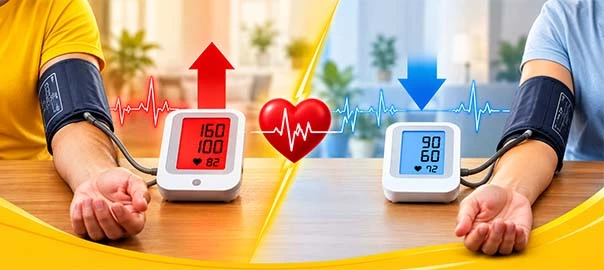
This blog shares the key differences between high and low blood pressure, covering their causes, signs, healthy range, and more.
Blood pressure isn’t just another health metric you see in your annual health check-up report. It can reveal a lot about your cardiovascular health. Even if you feel healthy at the moment, blood pressure readings can show you what’s been developing silently underneath.
This is especially true for high blood pressure, as it doesn’t show visible signs initially. If you’ve started prioritising your health, ensure you monitor your blood pressure levels frequently. We’ve shared the normal BP range and key high vs low blood pressure differences so you can start understanding your blood pressure levels more clearly.
What is Blood Pressure and Why Does it Matter?
Every time your heart pumps, it pushes blood through a network of arteries to deliver oxygen and nutrients to your organs. Blood pressure measures the force with which blood flows against your artery walls.
This measurement matters because it helps assess how well your cardiovascular system is functioning. You can use it to identify potential health risks, such as hypertension, which usually develops without any noticeable symptoms.
You should get your blood pressure measured frequently, as both high and low blood pressure might lead to severe health challenges (if overlooked).
Difference Between High Blood Pressure and Low Blood Pressure
Here’s a detailed high vs low BP comparison table to help you gain a better understanding of both.
| Basis of Differentiation | High Blood Pressure | Low Blood Pressure |
|---|---|---|
| Blood Flow & Its Impact | Blood pushes against artery walls with excessive force. If flow isn’t normalised, it can strain the circulatory system and damage blood vessels and organs over time. | Blood flow pressure against artery walls is lower than normal. Consistently low blood pressure can cause dizziness, fainting, blurred vision, and fatigue. |
| Concerning Pressure Levels | Higher than 180/120 mmHg | Lower than 90/60 mmHg |
| Potential Contributors | Family history of hypertension, smoking, excessive alcohol consumption, sodium-rich food, and obesity | Orthostatic hypotension, central nervous system diseases, extreme temperatures, and certain prescription medications |
| What Makes it Dangerous? | The primary danger is cumulative damage. With time, unchecked hypertension can increase the risk of a stroke, heart attack, kidney disease, and other severe health challenges. | Concerning levels of low blood pressure can potentially lead to organ damage. |
High Blood Pressure: Potential Symptoms, Causes, & Risk Factors
High blood pressure is often called a ‘silent’ condition because it has no visible signs initially. However, you can identify elevated blood pressure through proper tests and symptoms that often accompany high readings. Some common high BP symptoms to look for include –
- Confusion
- Dizziness
- Severe headaches
- Vision changes, such as sudden blurry vision and vision loss
- Chest pain
- Swelling
- Heart palpitations
These are general high BP symptoms and shouldn’t be used for self-diagnosis. If you notice any of these symptoms, get your blood pressure professionally tested. If you’re curious what might lead to elevated blood pressure levels, the following might be possible causes –
- Ageing, genetics, and family history
- Certain medications like antidepressants
- Alcohol
- Obstructive sleep apnea
- Renal artery stenosis
Even if you don’t have high blood pressure currently, be mindful of the following risk factors, as they can result in dangerously high blood pressure levels –
- Smoking
- Family history of hypertension
- Excessive alcohol consumption
- Obesity
- Sedentary lifestyle
- Use of stimulant drugs
- Consuming high-sodium food
Health-conscious individuals should get their blood pressure tested frequently. It will help maintain healthy blood pressure levels.
Low Blood Pressure: Potential Symptoms, Causes, & Risk Factors
Unlike high blood pressure, low blood pressure does produce noticeable symptoms. If your blood pressure levels go much lower than the normal range, you’ll generally notice the following symptoms –
- Dizziness
- Fainting
- Upset stomach
- Blurred vision
- Fast, shallow breathing
- Fatigue or weakness
- Confusion
- Trouble concentrating
These are some common low BP symptoms to watch for. While low BP can be caused by several factors, some common causes include –
- Orthostatic hypotension
- Central nervous system diseases
- Low blood volume due to injury-induced blood loss and dehydration
- Life-threatening conditions like heart attacks, collapsed lung, or immune reactions to severe infections
- Certain prescription medications
- Extreme temperatures
Other uncontrollable risk factors include age, family history, and genetics.
Understanding Blood Pressure Readings: What Do the Numbers Mean?
If you see a blood pressure chart, you’ll notice two figures: systolic blood pressure (the first/top number) and diastolic blood pressure (the bottom/second number). Both numbers represent the blood pressure in your arteries at different times.
For instance, systolic pressure is taken when the heart is beating, while diastolic pressure is taken when the heart is at rest between beats. We’re sharing a blood pressure chart that lists both extreme and normal BP ranges for your reference.
| Blood Pressure Range (Millimeters of Mercury) | What Does It Mean? |
|---|---|
| <120 AND <80 | Normal blood pressure |
| 120-129 AND <80 | Elevated blood pressure |
| 130-139 OR 80-89 | Stage 1 Hypertension |
| 140+ OR 90+ | Stage 2 Hypertension |
| 180+ AND/OR 120+ | Hypertensive Crisis (Urgency or Emergency) |
How is Blood Pressure Measured Correctly?
You can measure blood pressure at home with an easy-to-use blood pressure monitor. In this case, follow the instructions shared in the device manual. If you’re visiting a clinic to get your blood pressure measured correctly by a professional, then it’ll typically be measured in the following steps –
1. Prepare for the Measurement
Arrive slightly early so you can prepare for the test. Avoid smoking, coffee, or any form of exercise for at least 30 minutes before the measurement.
Empty your bladder before the test (if possible) and sit quietly for a few minutes before the reading. These steps help ensure accurate blood pressure measurements.
2. Get the Cuff Fitted Around Your Upper Arm
As you enter the testing room, sit upright in a chair with your back supported and both feet flat on the floor. Try to keep your legs uncrossed.
Once you’re ready, a professional will wrap an inflatable cuff around your bare upper arm. At this point, you can rest your arm on a table or armrest.
3. Let the Device Measure Your Blood Pressure
If an automatic monitor is being used, then the cuff will inflate and then gradually release pressure. The device will measure your blood pressure during this time.
With manual monitors, the professional inflates and then deflates the cuff to get an accurate reading. The gauge attached to the cuff gives a clear reading in most cases.
When Should You Be Concerned About High or Low BP & Consult a Doctor?
You should be concerned about your blood pressure if it’s dangerously high or low for extended periods. If your blood pressure results are below 90/60 mmHg or above 130/80 mmHg, you should be concerned.
In these cases, contact your doctor, as timely professional intervention can help normalise your blood pressure. Beyond these numbers, consult a doctor if you experience symptoms like blurred vision, chest pain, shortness of breath, headache, or difficulty speaking.
How to Maintain Healthy Blood Pressure
You can maintain healthy blood pressure by embracing the following changes in your day-to-day life –
- Eat balanced, nutritious meals with sufficient protein, fibre, fat, and carbohydrate.
- Become physically active; try to walk and exercise regularly
- Maintain a healthy weight
- Limit your alcohol intake
- Reduce high-sodium food items
In addition to the above steps, test your blood pressure frequently and make relevant lifestyle changes to keep it healthy. You should work in collaboration with your doctor to take the right steps.
Conclusion
Maintaining normal blood pressure is one of the best things you can do for your health. While blood pressure doesn’t stay the same all the time, you should keep it within the normal BP range, i.e., <120 and <80, but now below 90 and 60.
We’ve shared all the key details you should know about high and low blood pressure, the key differences between them, the healthy BP range, and more. You can use it to simplify your blood pressure management journey.
If you want to secure yourself under a dependable health insurance plan, then you can consider exploring our Shri Health Suraksha Insurance plan.
FAQs
What is considered normal blood pressure?
A reading of <120 and <80 indicates normal blood pressure. However, it shouldn’t go below 90/60 mmHg, as it points to low blood pressure.
How can I maintain normal blood pressure?
You should work closely with your doctor to get a personalized list of action steps that can help you maintain normal blood pressure. If you’re looking for lifestyle improvements that can help maintain healthy blood pressure levels, start eating healthy, exercise regularly, and limit alcohol consumption.
Can genetics cause high and low blood pressure?
Genetics can increase your risk of high or low blood pressure, but it isn’t always the cause of dangerously high or low blood pressure.
What are the common low blood pressure symptoms?
While many, a few of the common symptoms include dizziness, weakness, fainting, unexplained agitation, and shallow breathing.
How do I know if I have severe hypertension?
Blood pressure results above 180/120 mmHg indicate severe hypertension. However, other symptoms should also be monitored to confirm whether you’re facing severe hypertension




Save up-to 90% off on your Car Insurance
Related Posts

Individual Health Insurance vs Family Floater Which is Better?
Posted on October 15,2026share


Copied

What Is Covered and Not Covered Under Health Insurance?
Posted on September 28,2026share
Copied