Car Spare Parts Insurance What Does It Cover?
06 November,2026
Updated:06 November,2026
0 min read

share


Copied
 33
This is a detailed car spare parts insurance guide. It covers everything from which parts are included to factors influencing coverage and more.
If you own a car, you must purchase the right insurance for legal compliance; it’s non-negotiable. Those who want to protect their car against potential damage from road accidents/collisions can choose a comprehensive or standalone own-damage policy plus third-party insurance.
While these policies provide own-vehicle protection, they won’t cover every repair and replacement. That’s where car parts insurance becomes relevant. This car spare parts insurance guide covers every key detail you need to make an informed purchase decision.
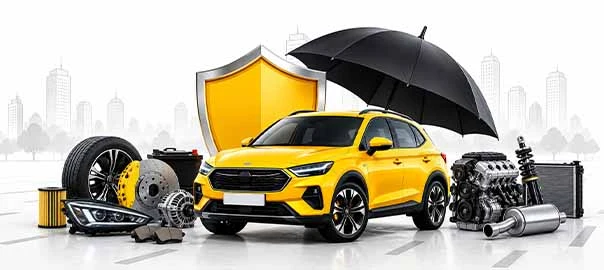
What is Car Spare Parts Insurance? What Does it Cover?
Car spare parts insurance isn’t a separate motor policy like third-party or comprehensive insurance. The term broadly refers to add-ons included in a standard insurance policy for desired car parts coverage.
It covers specific repair/replacement expenses that aren’t usually covered under standard policy terms. Depending on the add-ons selected, your car insurance coverage may expand to include depreciation deductions, consumables (nuts, bolts, screws, etc.), and engine components.
Which Car Spare Parts Are Covered Under Insurance?
A regular comprehensive or standalone own-damage policy will cover most crucial parts, including –
- Bumpers
- Bonnets
- Windscreen
- Doors
- Metal body panels
- Headlights
- Grilles
However, a standard policy doesn’t cover the engine or consumables like engine oil, nuts, bolts, and screws. To include these, you must purchase engine protection and consumables add-on with the primary policy.
You can also buy zero depreciation cover if you want the insurer to cover the full component cost of relevant rubber, metal, fibre, and glass components.
How Does Car Parts Coverage Work During a Car Insurance Claim?
The precise working mechanism depends on the type of car parts insurance you’ve purchased. We’re sharing what to expect in different scenarios –
- Consumables Cover
If you’ve purchased consumables add-on with the main policy, you can pass the cost of single-use components, such as nuts, bolts, screws, engine oil, etc., to the insurer. Without this add-on, the insurer will deduct the cost of consumables before processing your claim, increasing your out-of-pocket expenses.
- Engine Protection Cover
Even if you’ve purchased a comprehensive or standalone own-damage policy, it won’t cover engine-related expenses during claim settlement.
If you want the insurer to cover engine-related damage caused by water ingress, oil leakage, or repair/replacement of a key engine component, etc., then purchase the engine protection cover. This add-on ensures you can claim eligible engine-related expenses during claim settlement.
- Zero Depreciation Cover
Car components made of rubber, metal, fibre, glass, etc., lose value with time due to age-related wear. Insurers would deduct the applicable depreciation component while finalising your claim.
With zero depreciation car insurance, this depreciation deduction is waived, subject to the policy’s terms. As a result, you get a higher claim, minimising your out-of-pocket expenses.
Zero Depreciation Insurance and Spare Parts Coverage
Purchasing zero depreciation car insurance is a practical way to limit your out-of-pocket expenses during repairs/car part replacement after a road accident. However, check your car’s age, as insurers may not provide this add-on to very old cars.
You can also get consumables and engine protection cover to transform a regular policy into a spare parts insurance plan. These add-ons expand your policy’s coverage, so you can claim eligible costs for the car’s engine and single-use items like oil and screws during claim settlement.
What Factors Affect Coverage for Car Spare Parts?
The coverage in car spare parts insurance is affected by the following factors –
- Cause of Damage
Coverage depends heavily on how a particular car component was damaged. For instance, you may receive coverage benefits if a car part is damaged due to a road accident, natural calamity, or another event specified in the policy.
However, if the same part deteriorates from normal age-related wear and needs routine replacement, you’ll have to pay from your own pocket.
- Depreciation on Car Components
Car components made of nylon, rubber, fibre, and other materials lose value over time due to age-related wear. While a regular policy covers eligible repair and replacement expenses for these components, the insurer deducts applicable depreciation when finalising the claim.
If you want coverage to include the full component value, including depreciation, you should consider purchasing the zero-depreciation add-on.
- Type of Component
Regular car insurance coverage doesn’t include engine oil, coolant, grease, nuts, washers, bolts, and other single-use consumable items. You’ll need to purchase consumables add-on to expand the scope of coverage.
We’d suggest reading the policy’s full terms to understand which components are included and which require a separate add-on purchase for coverage.
How to Claim Insurance for Damaged Car Parts?
The car insurance claim process generally begins with a road accident or another event covered by the policy. To claim insurance on the damaged parts, follow the steps listed below –
- Inform the insurer about the damage by sharing full accident/damage details.
- Wait for a surveyor to visit and inspect the damage; don’t get the car repaired before a surveyor has examined it, completed a thorough damage assessment, and prepared a repair estimate.
- Once the inspection is finished, you can obtain an itemised repair estimate from a garage.
- File an official claim request by submitting the claim form and all required documents, including visual proof of the damage, an itemised repair bill, and an FIR (in case of a hit-and-run case).
- Wait for the insurer to assess and verify your claim request.
If your claim is successfully verified, you’ll receive the approved claim amount within the timeline shared by the insurer.
Those getting the repairs in a network garage can avail the cashless repair facility. After assessing and verifying the claim, the insurer will settle the approved repair bill directly with the garage.
Car Repair Insurance: What Should You Know?
Vehicle insurance policies are designed to cover the repair and component replacement expenses if they were necessitated by a road accident, natural calamity, or man-made calamity as specified in the policy documents.
If you get your car repaired or a part replaced for an event not covered by the policy, such as routine maintenance or age-related component damage, you’ll have to pay out of pocket. This is where car repair insurance becomes relevant.
It refers to regular vehicle insurance with additional coverage, i.e., coverage for the repair and replacement cost of mechanical/electrical components for reasons not covered in a standard policy. Car repair insurance can be beneficial if you own a high-end car, as even minor repairs can cost a substantial amount of money.
Tips to Check Your Car Insurance Coverage for Spare Parts
Reviewing car insurance coverage early is crucial to avoid unwanted challenges during claim settlement. Here are a few tips to check your insurance coverage for spare parts –
- Read the Inclusion & Exclusion Clauses
The best way to understand coverage is by reading the policy’s inclusion and exclusion clauses. Not all policies cover every spare part expense. Reading the policy terms will give you clarity about which parts are included, which require purchasing an add-on, and which are simply excluded.
- Verify the Depreciation Rules
You can check whether your policy includes zero depreciation cover and which parts qualify for it. Find out if the add-on excludes certain components or has restrictions on the highest amount payable. It will clarify the coverage aspect.
- Understand Applicable Deductions
Car parts insurance doesn’t guarantee the insurer will pay every repair bill in full. Check deductibles and other ineligible expenses beforehand to set realistic claim expectations.
Conclusion
Having car spare parts insurance can be a financially smarter choice than a regular insurance plan. It provides enhanced coverage so policyholders don’t face financial strain after a road emergency. We’ve covered every key detail about car parts insurance in this blog, so you can confidently decide whether it’s right for you.
If you’ve made your decision, consider exploring the different Car Insurance plans at Shriram General Insurance as they’re designed to accommodate diverse coverage needs. You’ll also find ample add-ons to enhance policy coverage.
FAQs
Does a comprehensive insurance plan cover spare parts?
While a comprehensive plan covers most car parts, a regular policy won’t cover the engine and consumables (nuts, bolts, engine oil, etc.) unless you purchase additional coverage.
Which car parts are covered under car insurance?
Body panels, headlights, windscreen, doors, and brake components are a few of the car parts generally covered under car insurance.
Can I claim insurance for a car part damaged due to age-related wear?
No, you cannot. Insurance policies would cover eligible costs for car part replacement if the replacement was needed due to a road accident, flood, fire, accidental collision, or other events specified in the policy.
How can I check the coverage available for spare parts?
If you already have a car insurance policy, read the policy documents carefully to understand the available coverage. Those planning to buy a new policy can review the policy prospectus and contact the insurer’s customer support for a better understanding.
Is spare parts insurance compulsory?
No, it’s not necessary. People comfortable with basic third-party or own-vehicle coverage can choose a regular third-party, comprehensive, or standalone own-damage policy.