Car Jump Starter: How It Works, How to Use It, And Safety Tips
11 November,2026
Updated:11 November,2026
0 min read

share


Copied
 24
This is a comprehensive guide on car jump starters. It covers everything from how to use a car jump starter to car jump starter price and more.
If your car’s battery powers prolonged AC use, headlights, and other vehicle features, it may drain faster than you realise. It can bring your road trips to a complete halt. A car jump starter can help you in these cases.
This compact, portable device can help you restart your car by supplying adequate electrical power to the dead battery. While helpful, you should use it carefully to prevent any safety risks. To simplify it for everyone, we’ve created this guide on car battery jump starters. It will help people understand how to use a car jump starter safely.
What is a Car Jump Starter?
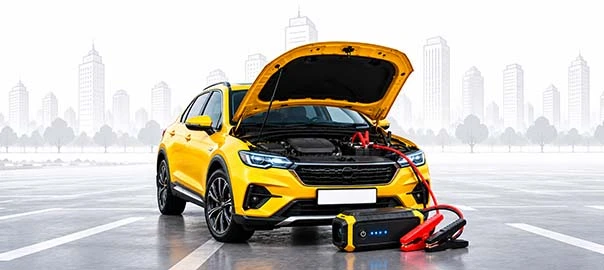
A car jump starter is a battery-powered portable device designed to start a car’s engine. You can use it to revive your car’s dead/exhausted battery within minutes. Unlike traditional jumper cables, this device doesn’t require another vehicle to draw power from.
It uses its own lithium-ion battery to deliver high electrical power via clamps. Its biggest advantages are portability and independence from other vehicles. If you’re curious how it works, then read the next section.
How Does a Car Battery Jump Starter Work?
Your car’s battery supplies electrical power to the starter motor, which eventually allows the engine to start and run until combustion can sustain it. However, a weak battery may not deliver enough current to the starter motor.
In such cases, your car’s engine will either crank slowly or fail to start. This is where the need for a jump starter comes in. As you connect the jump starter’s clamps to the battery terminals, it supplies power to the drained battery. The power is enough to help the starter motor turn the engine.
Once the engine starts, your car’s charging system can replenish the battery so the car continues to function normally. However, it will only work if the alternator and battery are functioning correctly, so make sure they’re always in good condition.
When Do You Need a Jump Starter for Your Car?
You’ll generally need a jump starter when your vehicle’s battery doesn’t have enough power to start the engine. Here’s an expanded list of common situations where you can use a car battery jump starter.
● Car’s Battery is Fully Dead
If you turn your car’s ignition key or press the start button but the engine won’t start, a jump starter can help.
● You Left the Lights On for Extended Hours
Sometimes, people accidentally leave their car’s headlights, cabin light, and electrical accessories switched on for several hours. It can drain the car’s battery faster. If your car’s battery has been drained for the same reason, you can use a car jump starter to restore enough power to start the engine.
● Car Has Been Parked for a Longer Time
If your car has remained unused for several days or even weeks at a stretch, its battery can gradually lose charge. It’s more common if the battery is considerably old or the vehicle has electrical systems that continue drawing power even when the car is parked.
● Extreme Cold Temperatures
Extremely cold temperatures can reduce a battery’s ability to deliver power while increasing the effort needed to start an engine. In such cases, a car battery jump starter can help you start the engine.
Car Jump Starter vs Traditional Jumper Cables
As a car owner, you can choose to use a portable car jump starter or traditional jumper cables to restart your vehicle’s engine. While both serve the same purpose, they’re widely different in terms of usage. Here’s a detailed comparison between traditional jumper cables and a modern, portable car jump starter –
| Basis of Differentiation | Car Jump Starter | Traditional Jumper Cables |
|---|---|---|
| Power Source | Uses its own lithium-ion battery to generate the required power | Relies on an external car to draw power from its engine |
| Features | Some models have multi-functional features, such as an integrated LED flashlight, power bank functionality, and built-in tyre inflator. Safety features, including reverse polarity protection and multi-layer circuit safeguards, are also standard. | Usually limited to transferring starting current; you won’t find the extra features common in modern portable jump starters. |
| Portability & Storage | Compact lithium models can easily fit in a boot or emergency kit. However, they require periodic charging and safe storage within the manufacturer’s temperature limits. | You can comfortably store and carry these cables in your car’s trunk, cargo area, or under the seats. However, don’t store heavy-duty jumper cables in a glove box, as they’re too bulky to effortlessly fit in this space. |
| Ease of Use | Generally easy to use due to the clearly labelled clamps and built-in safety protections. | Requires correct connection between two vehicles for ease of use. |
| Key Limitation | May not work as intended if the jump starter isn’t charged enough or powerful enough to deliver the required current. | Its dependence on another vehicle to draw power is its biggest limitation. |
How to Choose a Jump Starter for Your Car: Key Things to Consider Before Buying One
If you want the best car jump starter, then choose a model based on the following points –
● Match the Jump Starter to Your Engine
Check the manufacturer’s stated compatibility with your car’s engine size and fuel type. Diesel engines generally need more current to start than petrol engines, so make sure you buy a jump starter that can deliver the required power.
A jump starter suitable for a small hatchback may not necessarily be compatible with a larger diesel SUV, so choose accordingly.
● Understand the Technical Specifications Clearly
Before finalising a car jump starter, understand its technical side clearly. Explore its peak current, battery capacity, system voltage, etc. This will help you understand the maximum current it can deliver, how much energy it can store, and other key factors that directly affect its performance.
● Prioritise Built-in Safety Protections
Look for car battery jump starters with built-in safety features, such as spark-reduction features and reverse polarity protection. For added safety, prioritise models with short-circuit and overcurrent protection. These features minimise safety risks so people remain protected.
● Miscellaneous Evaluation Points
You should also check -
- How long a jump starter retains its charge
- How often it needs recharging
- The ideal temperature range for operation and safe storage
These details will enable you to set realistic expectations from the device, while letting you understand it more clearly.
Car Jump Starter Price: What Affects the Cost?
You can find decent, entry-level car battery jump starters within ₹3,500 to ₹5,500. However, if you want more than basic features, then the car jump starter price for advanced models can easily cost ₹10,000+. The price range is visibly diverse and broad because the cost is determined based on the following factors –
● Starting Power and Engine Compatibility
Models designed for larger petrol engines or more demanding diesel engines usually cost more, and vice versa. This is because higher power output requires a power system that can handle heavier electrical loads; such systems are rarely cheap.
● Internal Battery Capacity and Quality
Any jump starter with a considerably larger battery capacity will cost more because it can store more energy, potentially supporting more starting attempts between charges. Models with higher-quality battery cells and electronics can also cost more than models with basic components.
● Safety Features
The price of a jump starter will keep increasing as the list of available safety features grows. Models with advanced safety features, such as reverse polarity protection, spark-proof technology, and short-circuit protection, generally cost more than models with basic safety features.
● Brand, Warranty, and After-Sales Support
The car jump starter price reflects the device’s quality control processes, warranty coverage, and the manufacturer’s service network. As a result, models from a well-known brand with a strong warranty and reliable after-sales support will cost more than other models.
How to Use a Car Jump Starter: Step-by-Step Guide
Now that you’re aware of the fundamentals of a car jump starter, it’s time to learn how to use a car jump starter. Here’s a simple, step-by-step process on how to jump start a car –
- Park your car in a safe place and switch off the ignition and all electrical accessories.
- Connect the jump starter to the car’s battery; usually the red clamp is attached to the positive (+) terminal on the battery and the black clamp to the negative (-) terminal.
- Turn on the jump starter so the electric current can flow from the device to the battery.
- Once the battery has received sufficient power, try to start the engine.
- If the engine starts smoothly, you can switch off the jump starter and remove the attached clamps.
If you’re unsure, check the product manual, as it usually lists the step-by-step process for safe use.
How Often Should You Charge a Portable Jump Starter?
There is no fixed charging frequency for every portable jump starter. If you want to follow best practices, consider charging the jump starter in these two cases: after every use and before any long journey.
We recommend exploring the jump starter’s manual you received during purchase. It might include a manufacturer-recommended charging frequency that’s ideal for the particular device. If it’s available, follow it to keep the device ready for any future road emergency.
Conclusion
A car jump starter is an incredibly valuable addition to your car’s emergency kit. It can help you during road emergencies where the car’s battery fails to start the engine. While useful, it only helps if you know how to use a car jump starter correctly.
Hence, we’ve shared the step-by-step process on how to jump start a car, how to find the best car jump starter, and much more in this blog. You can use it as your go-to guide.
However, if you’re still unsure whether you can use it correctly, make sure you purchase a roadside assistance add-on with a Comprehensive Car Insurance or Standalone Own-Damage policy. You can find both Car Insurance plans at Shriram General Insurance, so ensure you explore them.
FAQs
Is it mandatory to purchase a car jump starter?
While it’s not mandatory, it’s certainly useful. If you don’t want to remain stuck in the middle of the road due to a drained car battery, then having a portable jump starter can be immensely beneficial.
Can a car jump starter fully recharge my car’s battery?
A car jump starter provides enough electrical power to turn the starter motor, and eventually the engine. It isn’t designed to fully recharge a car battery.
Traditional jumper cables or portable jump starter: which is more convenient?
Both are great options designed for the same purpose, but a portable jump starter is comparatively more convenient. It doesn’t require a second vehicle to draw power, and it doesn’t have heavy-duty cables that are usually difficult to store and use in an emergency.
How much does a car jump starter cost?
There is no fixed average, as you can easily find options within ₹5,000, ₹10,000, and even ₹15,000. The exact cost depends on the type of jump starter you need, desired features, battery capacity, peak current, etc.
Is a car jump starter safe to use?
Yes, car jump starters are safe to use, as many models have built-in safety features to minimise safety risks.