

 1222
1222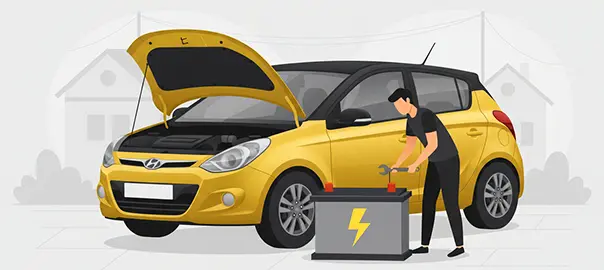
Learn How to Replace a Car Battery at Home: Step-by-Step Process
Replacing a car battery at home is a simple task. Many car owners hesitate to do this because they are unsure of the steps and worry about doing something wrong that could damage the car. With the right sequence of steps handy, we are here to make changing a car battery at home not only easier but also give car owners the confidence to do so.
Here’s our step-by-step guide to help you understand how to change a car battery at home.
Step 1: Prepare the Car
To begin with, first ensure you park the car on a flat surface. Turn off the engine completely. If the engine is warm or the car was used until few minutes prior, let the car sit idle until its engine cools down completely. To ensure the car doesn’t budge, you can apply the handbrakes for additional safety.
Step 2: Locate the Battery
Open the car’s bonnet and locate the battery. It’s usually a rectangular box with two terminals, positive (red coloured) and negative (black coloured). You can easily spot it in the engine bay.
Step 3: Identify and Disconnect the Terminals in the Right Order
You’ll have to disconnect the battery’s terminal to remove the old battery safely. Start this process by disconnecting the negative terminal first and then the positive one. If you’ve never done a car battery check before, here’s how you can identify its two terminals
- Negative Terminal – Denoted by the ‘-’ sign and marked with black colour/cable
- Positive Terminal – Denoted by '+' sign and marked with red colour/cable
Following this order will prevent instances of short circuits.
Step 4: Loosen the Battery’s Clamp to Remove the Old Battery
All car batteries are secured with a clamp or bracket, depending on the car’s model. You must unscrew it first so the existing battery can be safely lifted up. Since car batteries are heavy, hold them firmly with both hands in an upright position. This battery should be directly placed on a flat surface, preventing it from tilting.
Step 5: Clean the Surrounding Area
If the battery had been in use for many months, the surrounding area, such as the battery tray and terminals, would have accumulated dust. You can clean it using a dry cloth and a terminal-cleaning brush.
Step 6: Install the New Battery
After you’ve cleaned the space, place the new battery in the same position as the old one. While you are placing the new batter, do take care to ensure that the battery terminals match the previous positioning.
Step 7: Reconnect Terminals
You can now reconnect the terminals, starting with the battery’s positive terminal first. Next should be the negative terminal. Tighten both the terminals so proper battery connection can be established. You should also reinstall the clamp or bracket at this stage to secure the battery.
Step 8: Test the Car
It’s the last step: start the car’s engine to check if everything is working perfectly.
Why Learning to Replace a Battery is Useful?
As a car owner, you might wonder why you should learn to change a car battery at home when mechanics are available to do it. Every car owner should learn this skill so they can replace the battery when professional help isn’t immediately available.
Besides helping you during emergencies, this skill can also help you save money on battery maintenance.
Tools Needed to Replace a Car Battery
You don’t need many car battery tools for a successful car battery replacement. We’d suggest having the following tools at all times:
- Rubber or insulated gloves
- Safety goggles
- Spanner or wrench
- Clean dry cloth
- Battery terminal cleaning brush
- Pilers or terminal pullers (optional)
What are the Important Safety Checks You Must Know
Whether you’ve done car battery maintenance work before or are attempting to do it for the first time, you should always be mindful of the following safety precautions –
- Park the car on a flat surface to avoid battery tilting during replacement.
- Switch off the car’s engine, remove the keys, and ensure all electrical systems are turned off before starting the battery replacement process.
- Wear insulated gloves and avoid all direct contact with battery terminals to reduce the risk of electric shock.
- Avoid smoking in the area, as a few flammable gases may be present.
- Always place the car’s battery on a stable surface and handle it upright to prevent acid leakage.
- Don’t let any metal tool or cable touch both the terminals at the same time. It can cause sparks or damage the battery.
- The negative terminal should be disconnected first and reconnected last to prevent any short circuits.
How Car Batteries Work?
A car battery is like a stored energy box that helps your car start and keeps your electrical systems running. Inside these batteries, you’ll find lead plates dipped in a liquid called electrolyte. It’s common in traditional lead-acid batteries that you find in older, budget-friendly cars.
When you turn your car keys (or press the start button), a chemical reaction generates between the lead plates and the liquid. This reaction produces electrical energy (current) that flows through the battery terminals into your car’s system. This energy –
- Powers the car’s starter motor to crank the engine
- Supplies electricity to your car’s lights, horns, and electronic components
Once the car’s engine starts, the alternator takes over. It then powers the car and even recharges the battery at the same time.
Different Types of Car Batteries
You’ll find the following types of car batteries across all the best car battery brands.
Lead-Acid Battery
It’s the most common type of car battery used in cars that uses lead plates and an acid liquid to produce electricity to power a car’s engine. These batteries are reliable for basic use, affordable for most budget cars, and can deliver high power almost instantly.
Its only downside is that it requires comparatively more maintenance and doesn’t last as long as other car batteries.
Maintenance-Free (MF) Battery
A maintenance-free battery is a sealed lead-acid battery. Since it’s sealed, you don’t have to check or refill the liquid regularly. You’ll find these batteries in most modern cars because they’re cleaner, safer to handle, and require no maintenance.
Absorbent Glass Mat (AGM) Battery
An AGM battery is an advanced type of lead-acid battery. You’ll ideally find them in modern cars because of their fast charging capabilities and superior performance. Instead of the usual liquid electrolyte, AGM batteries use a thin glass fibre mat to absorb and retain the electrolyte. It makes them more spill-proof and safe for usage.
Gel Battery
A gel battery is also a type of lead-acid battery. In gel batteries, the electrolyte is usually stored in a gel-based substance. It helps keep the electrolyte firmly in place, making the battery fully spill-proof. Thanks to its design, a gel battery remains more stable in heat and vibration. Although they’re safe and long-lasting, they’re sensitive to overcharging.
Recognising the Signs: When to Go for Car Battery Replacement
Car battery maintenance can seem challenging. If you’ve never replaced car batteries, you may struggle to remember their expiry dates. Thankfully, you don’t have to remember. You should proceed with a car battery replacement if you notice any of the following signs.
- Sudden delays in starting the car start
- Requiring frequent jump-starting
- Dim headlights and electrical Issues
- Dashboard warning light turning on
Conclusion
Every car owner must learn basic car battery maintenance techniques. Even if you have garages near your location, knowing the step-by-step process for safely changing a car battery can benefit you in emergencies. We’ve shared a detailed, step-by-step process for changing a car battery safely at home so you can follow it easily.
If you want to protect your entire car from engine-related or other financial damages, you must secure it with a dependable car insurance policy. You can explore our Comprehensive Car Insurance plan if your primary priority is enhanced coverage at affordable premiums.
FAQs
1. What’s the typical lifespan of a car battery?
A standard car battery can last 3 to 5 years on average. Once the battery expires, you must replace it with a new one.
2.Do I need a mechanic to replace my car’s old battery?
Not necessarily. You can replace your car’s battery if you have the required safety tools and a step-by-step knowledge of the battery replacement process.
3. Can I throw my old car battery in the dumping ground?
No. Car batteries should be disposed of responsibly. You should hand it over to a local battery dealer or a recycling facility for safe disposal.
4. Is it necessary to disconnect the negative terminal first?
Yes, it’s compulsory. Following this sequence will help you prevent short circuits and battery damage.
5. Can I charge a dead battery instead of replacing it?
You can charge a battery with a battery charger only if it’s discharged. If a battery can no longer hold a charge, you must replace it with a new one.