

 5456
5456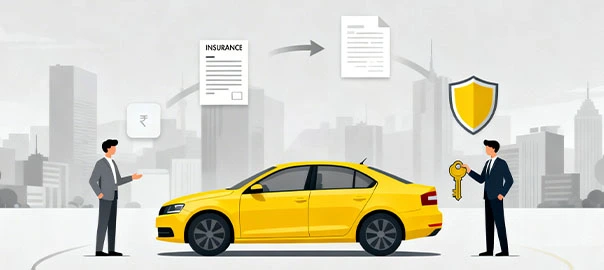
How to Transfer a Car Insurance Policy in India to a New Owner: Step-by-Step Process
When you sell your car, you cannot directly transfer the car insurance after selling the car, on your own. While you can notify the insurer about the sale, only the buyer can initiate the actual policy transfer. Here’s how to transfer car insurance online.
Step-by-Step Process
Step 1: Update the Insurer About the Sale
As a seller, it’s your responsibility to inform your insurance company about the vehicle sale. Although it will keep the insurer updated, they cannot proceed with the policy transfer until the buyer approaches them.
Step 2: Submit Documents
The insurer will require numerous documents, including the updated Registration Certificate (RC), proof of transfer (Form 29/30), the sale agreement, and identity & address proof of the new buyer. Some insurance companies might ask you for additional documents, so be ready with those.
Step 3: Fill the Insurance Transfer Application Form
The buyer needs to complete and submit a policy endorsement or transfer request form provided by the insurance company. The insurer will only consider the request to update the policyholder's name and other details once this form is properly filled out.
Step 4: Pay the Transfer Fee
There is a nominal fee payment to be made for every car insurance transfer. Pay this fee to the insurer and wait for them to update the policy records.
Step 5: Issuance of Policy Endorsement
Once all details are verified, the insurer will issue an endorsement document. This document will reflect the new owner’s name and confirm that the policy transfer has been completed.
Note: Although you will find most of these steps while filing for car insurance transfer, some insurers may have additional verification steps. Hence, it’s wise to review the exact steps your existing insurance company follows.
How to Buy Vehicle Insurance After Sale
The buyer can purchase a new car insurance policy if the existing insurance policy has expired or if the buyer doesn’t want to continue with the existing policy due to coverage or budget limitations.
In such cases, the buyer should choose a new policy that matches their requirements and budget. The buyer can choose any insurer of their choice, select the type of coverage they want, and make the payment to get their car secured under a new policy.
Why is Vehicle Insurance Necessary?
Vehicle insurance is a compulsory, legal requirement for all Indian vehicles. You cannot take your car onto Indian roads without securing it under a relevant insurance policy. Every vehicle must have at least a valid third-party insurance policy to cover damages or injuries caused to others during a road accident.
Those with greater coverage requirements can choose a comprehensive policy. Besides legal compliance, vehicle insurance is also necessary as it provides financial protection to the new car owner.
It will protect the owner against financial damages arising from road accidents, theft, natural disasters, and vandalism. Without valid insurance, the owner will have to pay all repair expenses and third-party liability out of their own pocket.
How to Sell Car Insurance After Transfer
What Will Happen if the Vehicle Meets a Road Accident Before Insurance Transfer?
The new buyer may face significant financial risks if the vehicle is involved in an accident before a successful car insurance transfer. Although the coverage benefits of third-party insurance are automatically transferred to the new car owner, it’s only valid for up to 14 days.
The policy transfer must be finished within these days so the buyer can continue receiving the coverage benefits. To clarify, this 14-day grace is not applicable to own-damage policy coverage.
It means that own-damage claims will not be accepted until the transfer is complete, and the new car owner will have to pay for repair expenses out of their own pocket. It’s a key reason why the buyer and seller must transfer car insurance in India at the earliest.
Importance of Transferring a Car Insurance Policy
Transferring vehicle insurance after the sale is important for both the buyer and seller. If you don’t transfer the policy, the new car owner cannot receive coverage benefits; their claim requests may be rejected until the full transfer is complete.
As a seller, your name will remain linked to the policy until the transfer process is finished. This means you can still be liable, as per the insurer, and you are subject to legal and financial risks. For instance, if any third-party liability arises after two weeks, the seller may be liable to pay the damages. Ensure the insurance policy is transferred on time so both the car seller and the buyer can benefit.
Who is Responsible for Transfer of a Car Insurance Policy?
Although both the seller and the buyer are responsible for timely policy transfer, the buyer has greater responsibility. The insurer will only proceed with the transfer of the car insurance policy if the buyer initiates it.
The seller can inform the insurer about the vehicle sale by uploading documents proving the ownership transfer. Therefore, the buyer and seller must work together to fulfill their responsibilities and expedite the policy transfer.
The seller’s role is to inform about the sale, provide the necessary documents, and confirm the sale. The buyer’s role is to initiate the transfer process and actively follow up with the insurer to ensure a timely transfer.
Tips to Ensure a Smooth Online Transfer
The process of transferring vehicle insurance after a sale is straightforward. However, you can stick to the following tips to ensure a smooth transfer.
Initiate the Transfer Early
Do not delay transferring the policy once a sale is made. Delays might result in the loss of coverage benefits. Therefore, both the buyer and seller should coordinate to complete the policy transfer process as soon as possible.
Ensure all Documents are Accurate
A practical way to ensure faster policy transfer is to ensure that all the documents are accurate and consistent. There shouldn’t be any mismatch in details listed in the RC, insurance policy papers, and ID proof, as this can result in delay or rejection of the transfer request.
Follow up with the Insurer
Even with an online process, delays can occur. Hence, continue following up with the insurer to ensure the transfer is completed early.
Final Thoughts
Transferring car insurance in India after selling a car can bring financial and legal protection to both the buyer and seller. Hence, if you’ve recently finalised a vehicle sale, you must coordinate with the buyer to complete the car insurance transfer.
We’ve already covered the steps on how to transfer car insurance, who should initiate it, and other relevant details in this blog. Follow all the details to enjoy a smooth policy transfer.
If the buyer doesn’t want to continue with the existing policy and wants a better policy with enhanced coverage, you can ask the buyer to explore the Comprehensive Car Insurance plan at Shriram General Insurance.
FAQs
1. Why should I transfer car insurance after selling a vehicle?
For legal reasons, the insurance must be switched to the buyer's name. If the policy stays in the seller's name, the new owner won't be able to use any of the coverage.
2. Will third-party insurance automatically transfer after the sale?
Yes, but for only up to 14 days. The coverage benefits will remain after this period once the transfer is complete.
3. Is online car insurance transfer possible in India?
Yes, you can easily transfer the car insurance policy online. Most insurers provide this facility.
4.Who pays for the car insurance transfer fee?
The buyer must pay the car insurance transfer fee.
5. What documents are needed to facilitate car insurance transfer?
To initiate the car insurance transfer, you will require an updated copy of the RC, identity & address proof of the new buyer, and the sale agreement.