

How Rain And Floods Affect Electric Cars in India?
03 April,2026
Updated:30 September,2026
0 min read

share


Copied
 4683
4683This blog highlights whether it’s safe to drive electric cars in India during rain and flood-like conditions. It also includes EV water protection tips.
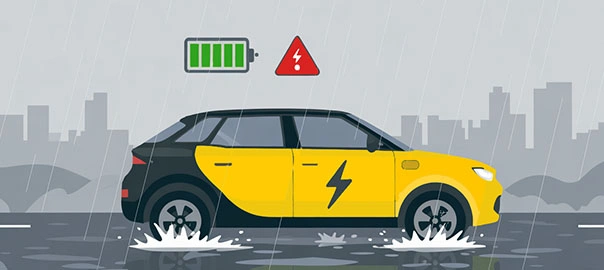
The sight of a stalled car in knee-deep water is common in waterlogged areas during heavy monsoon and flood-like conditions, but the concern becomes far more serious if there’s an electric car in the same place. Suddenly, you’ll worry about the water damaging the car’s battery and the potential threat of an electric shock.
If you’ve had similar concerns recently, this blog is for you. It covers the myths surrounding EV water damage, the steps you can take for EV water protection, and whether it’s safe to drive electric cars during rain/flood-like conditions.
Can You Drive Electric Cars During Floods?
Yes, you can drive electric cars on flooded roads, but only within clearly defined limits. Most modern-day EV batteries are designed to IP67 standards. It means that even if the EV is submerged in water (up to a meter deep) for about 30 minutes, it won’t be damaged by leakage.
Although driving on extremely flooded roads is not recommended for any vehicle (petrol or electric), if you still have to navigate them for any reason, you can do so in your electric car. However, we’d still suggest keeping your EV out of severely flooded areas, as it’s still an ordinary vehicle, not a flood-proof machine.
How Does Rain Affect Electric Cars?
Rain does not affect electric cars in any capacity. Even if you’re driving your electric car in heavy rain conditions, you won’t notice any EV rain damage. It’s because EVs are built to withstand all these external conditions. They feature tightly sealed battery packs, insulated wiring, and heavily protected electronics, capable of operating in wet environments.
Can I Charge Electric Cars in Floods?
Charging an EV during normal rain is completely safe, as all electric car chargers are weatherproof. Since charging systems feature weatherproof connectors, insulation, automatic shut-off mechanisms, etc., incidents of electric shock or other EV water damage are rare or nonexistent.
However, charging electric cars during floods or in waterlogged areas becomes an entirely different situation. If water accumulates around the charging point or cable, it might increase the risk of electrical faults or short circuits. If, for any reason, charging electric cars in floods becomes necessary, find a charging station with dry, stable chargers.
Common Myths vs Reality About EVs in Monsoon
The internet is filled with myths about rain’s effect on electric cars. This misinformation can easily influence your EV-buying and driving decisions, especially during the monsoon season. Hence, we’ve listed and debunked the top 5 myths about electric cars in floods and monsoons to help you make informed decisions.
Myth 1: EVs Cannot Operate in Rain
Reality: EVs are extensively tested in wet, humid conditions before being launched in the open market. Every component, ranging from their battery to electrical systems, is heavily sealed and insulated. It allows electric cars to operate normally, even during heavy rainfall.
Myth 2: Electric Cars are Prone to Shocks in Water
Reality: One of the most widely peddled myths about EVs’ safety in rain is that they’re prone to shocks from water exposure. In reality, they’re equipped with multiple safety layers to ensure EV water protection. If any fault or leakage is detected, the EV system will automatically shut down instantly to prevent any threat.
Myth 3: Charging EVs is Unsafe During Heavy Rain
Reality: EV charging equipment is weatherproof by design. Hence, even if you charge your electric car during heavy rainfall, it won’t pose any problems or safety risks.
Myth 4: EV Batteries Get Easily Damaged due to Water Exposure
Reality: Most modern EV batteries have an IP67 rating. Such high ratings are usually given to specialised equipment, such as submarines. This rating alone indicates that EV batteries are prone to damage if exposed to water within specified limits (up to 1 meter deep in water for about 30 minutes).
Myth 5: Electric Cars are More Dangerous Than Petrol Cars in Floods
Reality: Both EVs and petrol cars face the same level of threats when exposed to extreme, prolonged flooding. However, they can easily navigate temporary flood-like situations.
Essential Dos and Don’ts for EV Care in Monsoon
Although rain’s effect on electric cars is minimal to nonexistent, you can still follow the dos and don’ts shared below for extra safety.
Do’s
- Every EV owner must stick to the following list of do’s:
- Park your electric car in an elevated and covered space
- Inspect charging ports periodically (if you have an EV charging facility at home) to ensure they’re dry and clean throughout the monsoon season
- Get your EV inspected at an authorised dealership if it has been exposed to unusually high water levels for an extended period
- Drive slowly through waterlogged patches to avoid sudden splashes into sensitive areas
Don’ts
- Here’s a full list of don’ts that EV owners should be mindful of during monsoon:
- Don’t drive assuming waterproofing means unlimited water resistance
- Avoid driving through waterlogged areas where the water level reaches above the wheel hub level
- Don’t ignore warning alerts after driving through flooded areas
- Avoid leaving charging flaps open during rainfall
- Do not attempt to charge in a severely waterlogged parking facility
EV Safety Tips in Rain
To ensure additional EV safety in the rain, follow the tips below.
Drive Smoothly
Driving smoothly and not aggressively might sound like a small tip, but it’s crucial during monsoon drives. Since EVs deliver instant torque, driving aggressively can cause wheel spin on wet roads. Gentle acceleration will help you get better traction and control.
Maintain a Safe Driving Speed and Distance
Wet roads increase stopping distance. Hence, when driving in heavy rain, maintain extra space between vehicles and avoid sudden braking.
Avoid Deep Water Crossings
Even if your electric car can handle water, avoid crossing roads flooded with deep or fast-moving water. It’s always risky for the car and the people sitting inside. Take a longer yet safer route instead.
How EV Ensures Flood Protection
If you own an electric car, you don’t have to make additional efforts to protect it during monsoon and floods. These cars are already equipped with EV flood protection features and mechanisms, so they can withstand water exposure responsibly.
Even if an abnormality is detected, the system will shut off immediately to prevent any damage or safety risk. However, the presence of safety features shouldn’t be a reason to drive electric cars on severely flooded roads.
How Electric Cars Handle Waterlogged & Flooded Indian Roads
Electric cars are well-designed to handle waterlogged and flooded roads in India. Since everything from their battery to key electrical components is encased in multiple safety layers, temporary water exposure won’t be a concern. You can navigate through waterlogged areas, but avoid driving in extremely flooded areas with fast-moving water.
Final Thoughts
EVs are still making their way onto Indian roads, which is why people don’t have sufficient awareness about driving electric cars during monsoon and flood-like conditions. Although the term ‘electric’ might make the car sound unfit for driving under wet conditions, the reality is different.
You can effortlessly drive your electric cars in floods and rain, just like regular petrol cars. If you’re still worried about potential EV rain damage, you can handle it by investing in dependable EV Car Insurance. At Shriram General Insurance, we provide insurance for both regular and EV cars, so explore them if you want great coverage.
EVs and Water Exposure - Check Manufacturer Disclosure (Important)
While all EVs are designed for safety, keep in mind that they’re tested for safety under controlled conditions. If an electric car is exposed to prolonged submersion or deep flooding beyond the limits specified by the manufacturer, then you cannot rule out the likelihood of damage.
Hence, we recommend reading the manufacturer’s disclosure before purchasing any electric car or to truly determine the safety level of driving it in the rainy season or on flooded roads. This blog reflects a general idea based on the safety standards EV manufacturers typically follow when manufacturing their electric cars.
If you want assurance of safety or have specific safety-related questions, we’d suggest contacting the manufacturer’s team for clarity.
FAQs
1. Can EVs handle waterlogged roads in Indian cities?
Yes, they can. All EVs are designed to navigate waterlogged roads, but ensure you don’t take them in areas where water levels are above 1 meter in length.
2. Is it safe to charge EVs during rain?
Yes, it’s safe. EV charging equipment is weatherproof, so they don’t become unusable during the monsoon season.
3. Do electric cars require extra maintenance during the monsoon?
Not necessarily. However, if your city or town has experienced higher-than-usual rainfall in a given year, you should have it inspected by an authorised dealer once.
4. Are petrol cars safer than EVs during flood-like situations?
Whether you own a petrol or an electric car, you can safely use it during flood-like situations. Yet, you should avoid using any car, petrol or electric, on heavily flooded roads for general safety reasons.
5. What if my EV’s battery gets exposed to water?
Although water won’t easily reach the car’s battery due to its multilayer casing, you don’t have to worry even if it does. The car’s electrical system is designed to detect any leaks or water exposure and automatically shut off for safety.