


Why Are Hybrid Cars Replacing Diesel Cars?
10 October,2026
Updated:10 October,2026
0 min read

share


Copied
 42
42This guide shares a detailed hybrid vs diesel car comparative analysis to help you choose the better option.
Diesel cars once dominated a large share of the Indian car market. They were the go-to vehicle choice for people who prioritised better fuel efficiency, strong low-speed pulling power, and great highway performance. While diesel cars still have a place in India’s automotive segment, their popularity and demand have reduced significantly.
What once occupied over 40% market share in FY2017 has now declined to less than 19% in FY2023. Cleaner mobility options, such as hybrid cars, are slowly taking its place in India. We’ve created this diesel vs hybrid cars guide to help you choose the right option between the two.
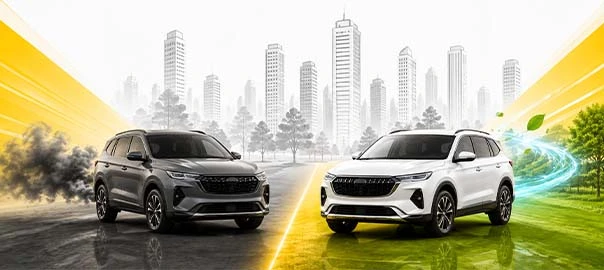
Hybrid vs Diesel Cars: Why is the Market Changing?
Diesel cars once held a massive market share in India. However, the constantly high diesel prices and the mandatory shift from BS4 to BS6, followed by BS6 Phase II implementation, made diesel cars lose their economic value. That’s why Maruti Suzuki, India’s top carmaker, has stopped manufacturing diesel cars altogether.
Even brands like Honda, Nissan, Renault, and Volkswagen no longer provide diesel cars in India, further shrinking the diesel car segment. This has visibly changed the car market over the years. In fact, diesel car sales experienced a consistent decline in sales between FY2023 and FY2025.
Hybrid cars in India are slowly filling this space, particularly in urban locations. Since hybrid cars, particularly those with strong hybrid systems, can deliver impressive fuel efficiency and driving performance, Indian buyers are increasingly willing to choose hybrids over diesel.
Hybrid cars in India are also slowly taking over the market because they provide a middle ground for people who are exploring alternatives to petrol/diesel cars but are not yet ready to go fully electric.
How Do Hybrid and Diesel Cars Work?
The diesel vs hybrid cars analysis will remain incomplete if you don’t understand how each car works. Diesel cars have a very straightforward working mechanism. Equipped with a conventional internal combustion engine, diesel cars compress air in the cylinder until it becomes hot enough for the injected fuel to ignite. The resulting combustion produces a strong force that drives the car.
Hybrid cars work differently as they rely on a combination of a traditional petrol engine and an electric motor with a specialised battery. If you’ve purchased a strong hybrid car, its electric motor will assist the engine during acceleration. It can also power the car independently during slow-moving traffic for short distances.
When hybrid cars slow down, regenerative braking converts some kinetic energy into electricity and stores it in the battery for future use. This mechanism helps hybrid cars deliver better fuel efficiency, especially on city roads.
Hybrid vs Diesel Mileage: Which is More Efficient?
If you regularly drive long distances for work, you should explore the hybrid cars vs diesel cars mileage aspect. Diesel cars usually have a fuel-efficiency advantage over comparable petrol-engine cars, especially during sustained highway driving.
Surprisingly, strong hybrids offset this disadvantage by reducing how often the car’s petrol engine needs to work. A real-world mileage check of Kia Seltos (diesel variant) and Toyota Hyryder Hybrid was conducted to determine which car is more fuel efficient. This was the result that concluded the hybrid vs diesel mileage debate –
| ARAI Mileage | Tested Mileage on City Roads | Tested Mileage on Highway Roads | |
|---|---|---|---|
| Kia Seltos Diesel | 19.1 kpl | 12.9 kpl | 17.8 kpl |
| Toyota Hyryder Hybrid | 27.97 kpl | 20.28 kpl | 22.85 kpl |
This indicates that strong hybrid cars can now deliver higher mileage than diesel cars. So, if high mileage is your priority, you may want to consider hybrid cars over diesel options.
Disclaimer: The example above reflects results from a particular model-by-model comparison. It doesn’t guarantee that every hybrid car will outperform a diesel car in terms of mileage. Consider exploring the car’s specifications to avoid generalisation.
Hybrid vs Diesel: Performance and Driving Experience
Anyone exploring the hybrid vs diesel car debate will naturally want to compare both on performance and overall driving experience. That’s precisely what this section covers. Diesel engines have long been known for strong low-end and mid-range torque, making them well suited to highway driving, steep inclines, and loaded vehicles.
Hybrid cars have a widely different character. Their electric motor can produce torque almost instantly, so a hybrid can feel particularly smooth and responsive when pulling away from a standstill. If you regularly navigate slow-moving traffic, it can make the vehicle exceptionally easy to drive.
One of their biggest highlights is little to no engine noise during electric driving; it’s something many people appreciate. If most of your driving is on congested city roads, a hybrid’s quiet low-speed operation and seamless electric assistance can make your driving experience feel incredibly refined.
However, if you frequently drive on highways or carry heavy luggage or multiple passengers, then diesel cars still have an advantage. You might still want to consider diesel cars if you value strong mid-range acceleration.
Maintenance Requirements of Hybrid and Diesel Cars
If you’re comparing diesel vs hybrid cars, pay close attention to maintenance requirements, as they will directly affect long-term ownership costs. Since both cars have conventional fuel engines, they require almost similar routine servicing. This may include timely oil changes, filter replacements, and brake and tyre maintenance.
However, diesel cars can require additional maintenance for systems like a Diesel Particulate Filter (DPF), the exhaust after-treatment system, and even fuel-injection components. When it comes to hybrid cars, some people may assume that they’re more expensive to maintain because they have more components like an electric motor and a specialised battery.
In reality, more components don’t necessarily mean higher routine maintenance costs. In fact, hybrid-specific electrical components generally require little scheduled maintenance. Exact servicing requirements can differ from those of a diesel engine, depending on the vehicle and manufacturer.
Generally, there is no clear winner in terms of maintenance because the maintenance requirements vary according to the -
- Specific model
- Manufacturer-recommended service schedule
- Driving conditions
- Annual mileage
- Vehicle usage and other key factors
Environmental Impact of Hybrid vs Diesel Cars
When comparing the environmental impact of hybrid vs diesel cars, hybrids generally have an advantage in urban driving. Their electric motor can significantly reduce fuel consumption and tailpipe emissions, particularly in stop-and-go traffic. Fully hybrid cars can also switch off their combustion engine during certain low-speed conditions, minimising pollutant emissions.
Diesel cars, on the other hand, produce comparatively more nitrogen oxides and particulate matter, which impacts the surrounding air quality. Although new diesel cars have modern emission-control systems, they don’t eliminate emissions entirely. If you want a more eco-friendly car that doesn’t worsen environmental problems, a strong hybrid can be a better choice.
Hybrid vs Diesel: Which One Should You Choose?
Since both hybrid and diesel cars are known for their unique strengths, you should consider choosing one that aligns with your driving requirements, driving environments, and driving behaviours. We’ve simplified it further for you.
Choose Hybrid Cars If –
- Most of your driving is in cities or congested urban areas.
- You want high fuel efficiency without depending on external charging infrastructure.
- You prefer a quiet, smooth, eco-friendly driving experience.
- You plan to use the car for several years so it can absorb the high, initial purchase cost and generate substantial fuel savings in the long term.
Choose Diesel Cars If –
- You frequently cover long highway distances.
- You value strong mid-range torque.
- You frequently travel with heavy luggage or more passengers.
- You want smooth performance on steep inclines.
You can use these points to make an informed decision. However, the final decision should depend entirely on your preferences and driving needs.
Conclusion
Hybrid cars are slowly gaining popularity in the Indian market, but they haven’t entirely replaced diesel cars. You can still find numerous diesel cars with strong engine and transmission options. Hybrid cars can grab your attention if you’re exploring reliable alternatives to petrol/diesel vehicles but are yet not ready to go fully electric.
We’ve already shared a detailed comparative analysis on diesel vs hybrid cars in this blog to help you make the right choice. Whether you decide to proceed with diesel or hybrid cars, consider securing it with our Comprehensive Car Insurance plan. It will provide the enhanced financial protection your car deserves.
FAQs
Hybrid vs diesel car: which is better for city driving?
While both can deliver good performance on city roads, you may consider choosing hybrid cars if you particularly face extensive stop-and-go traffic on your daily driving route.
Are hybrid cars expensive to maintain?
No, not necessarily. Hybrid cars may have additional components, but that doesn’t automatically make the car high-maintenance.
Why are diesel cars losing market share in India?
Due to the stringent emission-control norms mandated by the government, modern diesel cars now require sophisticated emission-control systems.
The cost and engineering complexity of upgrading these engines have taken away diesel cars’ economic advantage. As a result, many manufacturers have discontinued diesel models, which is why they’re losing share in the Indian car market.
Can hybrid cars deliver higher mileage than diesel cars?
While there’s no guarantee that every hybrid car can deliver higher mileage than diesel ones, you can find such options. For example, the Toyota Hyryder Hybrid delivers an ARAI mileage of 27.91 kpl, while the Kia Seltos diesel variant provides 19.1 kpl.
Diesel vs hybrid cars: which is more eco-friendly?
If eco-friendliness is your primary concern, then hybrid cars are better than diesel cars as they generate fewer air pollutants while driving.