


Why Are Hybrid Cars Becoming Popular in India
05 August,2026
Updated:30 September,2026
0 min read

share


Copied
 356
356This blog covers all the key details about Hybrid cars in India, including the reasons behind their growing popularity, features, working mechanisms, and more.
While people are busy talking about EVs, hybrid cars are silently expanding their share in the Indian car market. According to reports, hybrid sales can reach 10% of the total car sales by the end of FY 2026- 2027, while EVs are expected to reach half this mark. This popularity and demand for hybrid cars isn’t random.
It is driven by people exploring alternatives to the conventional petrol/diesel cars due to the rising fuel prices. While options like EVs already exist, not many people are willing to go fully electric. Hybrid cars in India provide the perfect middle ground for such people. We’ve explored all the key reasons behind their growing popularity in detail in this blog, so read till the end.
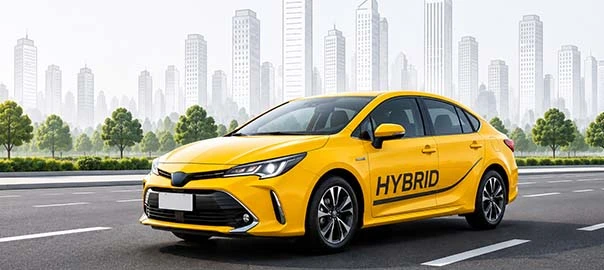
What Are Hybrid Cars And How Do They Work?
Hybrid cars are passenger vehicles that use dual power sources to run efficiently. All hybrid cars have a traditional petrol engine and an electric motor (with a specialised battery); both power sources work together to maximise fuel efficiency and deliver a smooth driving experience. You’ll find the following three types of hybrid cars in the Indian market –
Strong Hybrid (HEV)
It can run on a traditional fuel engine, an electric motor, and, in some cases, both. It entirely depends on the driving conditions.
Mild Hybrid (MHEV)
The electric motor in MHEV can assist the engine while driving, but it cannot drive the car independently.
Plug-in Hybrid (PHEV)
As the name indicates, this type of hybrid car requires external plug-in infrastructure to charge the battery. You can use it for longer electric-only driving.
All modern hybrid cars have an intelligent onboard computer system that independently decides when to use the petrol engine, electric motor, or both. The decision is taken based on the driving environment.
For example, a hybrid car will start using the electric motor when navigating stop-and-go city traffic. As the same car starts driving on highways, the traditional fuel engine takes over for a smooth, uninterrupted driving experience.
Why Are Indian Buyers Showing Interest in Hybrid Technology?
Indian buyers are increasingly choosing the best hybrid cars over EVs, petrol, and diesel cars for their fuel efficiency. Nearly 98,010 hybrid cars were sold in the FY: 2019-2020, and it increased to 3,62,866 units by the end of the financial year ending March 2026, highlighting a fourfold increase.
This increased interest in hybrid cars in India can be credited to the following reasons –
Rising Fuel Prices and Better Mileage
As petrol and diesel prices remain consistently high in India, buyers now want cars that can reduce their overall vehicle running costs.
Since hybrid cars can independently decide when to use a traditional fuel engine and when to use the electric motor, they deliver improved fuel efficiency. The fuel efficiency becomes particularly noticeable during city driving with frequent stop-and-go traffic.
No Dependence on External Charging Infrastructure
Not every hybrid car requires external charging. If you don’t want the hassle of finding external charging stations to recharge the car’s battery, choose a strong or mild hybrid car. Their battery recharges on its own via regenerative braking and the car’s primary fuel engine while driving.
These two hybrid cars can give you EV-like efficiency without establishing any dependence on external charging infrastructure. It alone makes a hybrid car an incredibly convenient and practical choice for everyday driving.
Creates the Best Middle Ground Between Petrol Cars and EVs
Not everyone concerned about rising fuel prices is ready to go fully electric because of the limitations tied to external charging infrastructure.
It is where a hybrid car emerges as the best option. It gives the best of both worlds: higher fuel efficiency due to the electric motor and EV-like driving efficiency without reliance on external charging infrastructure.
Hybrid Car Mileage And Benefits: Why They Matter
Anyone planning to make a purchase should start by evaluating the mileage and benefits of a hybrid car. It will help you determine if a hybrid car is worth buying. The best hybrid cars usually deliver an ARAI mileage of around 22 kilometres per litre (kpl) to 28 kilometres per litre (kpl).
However, the real-world tested hybrid car mileage differs significantly from the claimed ARAI mileage. The average tested mileage of hybrid cars falls in the 14-22 kpl range. If fuel efficiency matters to you, consider choosing a hybrid model that delivers the best tested mileage.
It will help you lower your car’s running cost. You should also evaluate the key benefits for informed decision-making. You can expect the following hybrid car benefits in the best hybrid cars in India.
Lower Running Costs Over Time
Fuel is one of the biggest long-term ownership expenses. A hybrid car’s ability to automatically switch between the electric motor and the main engine helps it save fuel over time.
The savings on recurring petrol (fuel) costs can be significant if you regularly travel long distances for work and encounter stop-and-go traffic for most of the trip. Since the car will start using the electric motor in such cases, fuel savings follow.
Smoother & Refined City Driving
Unlike regular petrol or diesel cars that rely entirely on the engine, hybrid cars can switch between dual power sources for better driving efficiency. They usually switch to the electric motor when navigating stop-and-go city traffic. As a result, you experience less engine noise and minimal vibrations.
Less Wear on Key Mechanical Components
In a hybrid car, the electric motor assists the engine during demanding situations, reducing the engine’s workload. This shared load slows the wear and tear of key mechanical components, so they remain in good working condition for an extended period.
Best Hybrid Cars: Features Buyers Should Look For
Anyone exploring the best hybrid cars in India for purchase should look for the following key features.
Appropriate Hybrid Powertrain Configuration
The market provides strong, mild, and plug-in hybrid cars, each with varying configurations. A strong hybrid uses an engine, an electric motor, or both for movement, while a mild hybrid cannot be moved using the electric motor alone. Hence, check the configuration to find the right model.
Advanced Safety Features
Fuel efficiency should never come at the cost of safety. You should prioritise hybrid cars equipped with the latest safety features. Multiple airbags, a 360-degree camera, hill assist, and an anti-lock braking system should be standard safety features. The availability of a level 2 ADAS suite is even better.
Hybrid Monitoring System
Consider exploring models with a clean, user-friendly hybrid display that provides all key details on battery charge, energy flow, fuel efficiency, and more. It will keep you updated on the car’s latest status.
Battery Technology
The battery is one of the most important components of a hybrid car. Hence, check its type, capacity, cooling system, and other features to ensure you’re investing in the right battery technology.
Who Should Buy a Hybrid Vehicle?
Although anyone can buy a hybrid vehicle, people desiring any of the following can consider proceeding with the purchase:
- Fuel efficiency during regular, long-distance travel
- Smooth and refined driving experience
- EV-like efficiency without extreme reliance on external charging stations
Even if you aren’t specifically looking for any of these, you can still purchase a hybrid car due to its aspirational tag, growing popularity, or a personal preference.
Key Factors to Consider Before Purchasing a Hybrid Car
There are three different sub-types within hybrid cars for you to choose from. These mainly differ by electric-only capability, battery size, and charging method. You can identify the best hybrid cars in India for purchase by evaluating available options against the following factors.
Mild Hybrid: Uses a small 12V to 48V electric motor that cannot move the car by itself and only assists the main engine.
Strong Hybrid: Features a larger electric motor and battery pack that can power the wheels independently. The car can run on pure electricity at low speeds or in slow city traffic
Plug-in Hybrid: Features a large battery and motor capable of driving solely on electricity and requires to be plugged in for charging.
Your Daily Driving Environment
You should choose between a strong, mild, and plug-in hybrid car based on your daily driving environment. Each works best in varying driving conditions.
A strong hybrid is a great choice if you frequently travel on both city roads and highways. Mild hybrids are a better choice if you’re specifically looking for a car for smooth city driving.
Cost of Ownership
Hybrid cars generally cost more than comparable petrol models. However, you should look beyond the showroom price while making a purchase decision.
Evaluate the overall running and ownership expenses to get a clear picture of how much it will cost to keep the car running. These expenses usually include recurring fuel costs, insurance, maintenance expenses, etc. This assessment will help you choose an economic model you can comfortably maintain.
Modern Features
If you plan to use the car for an extended period, then prioritise models with all relevant modern features. To ensure you’re getting a value deal, explore features installed for safety, entertainment, convenience, styling, and technology upgrades.
Check the Type of Hybrid You’re Buying
Although hybrids like strong, mild, and plug-in belong to the same hybrid car category, each delivers a different driving experience. For example, the electric motor in mild hybrids is designed to assist the car’s engine while driving; it cannot move the car alone.
However, strong hybrids are capable of driving on electric power alone for a short distance. You should explore the different types of hybrids available in the market, and take adequate time to understand each. It will help you make an informed choice.
Battery Warranty
A car battery is a crucial component of a hybrid car. It significantly influences the overall driving experience and range, so it deserves careful evaluation. While most modern batteries are designed to last several years, you should still choose a car that provides better warranty coverage for the battery.
Hybrid Cars vs Conventional Petrol and Diesel Cars
| Basis of Differentiation | Hybrid Cars | Petrol Cars | Diesel Cars |
|---|---|---|---|
| Power Source | Relies on a traditional fuel engine, electric motor, or both, depending on the driving condition. | Powered entirely by the petrol engine. | Powered purely by the diesel engine. |
| Where Does It Perform the Best? | Stop-and-go traffic | Good performance on both city roads and highway cruising. | Better performance on long highways when driving at a steady speed. |
| Ideal For | Urban commuters and people seeking improved fuel efficiency. | Buyers prioritising strong performance on both city and highway roads over fuel expenses. | People seeking strong highway performance. |
| Fuel Efficiency in Real World Conditions | Excellent in cities | Good fuel efficiency, except in stop-and-go traffic common in metro cities. | Delivers maximum fuel efficiency during long, uninterrupted highway drives. |
| Driving Experience | Smooth, quiet, and refined | Responsive and refined, but expect engine noise and higher fuel consumption in stop-and-go traffic. | Smooth and powerful experience while highway cruising. |
| Where Does It Save The Most Fuel? | The heavier the traffic, the greater the fuel savings because the petrol engine runs less frequently. | Delivers better fuel savings in free-flowing traffic with minimal idling. | Expect maximum fuel efficiency during long high drives at a steady speed. |
Conclusion
Hybrid cars are slowly capturing India’s car market share by providing a middle ground for people who aren’t ready to go fully electric and are unwilling to continue with petrol/diesel cars due to the rising fuel prices.
You can also consider choosing the best hybrid cars in India over EVs or petrol/diesel cars if you desire better fuel savings and a more refined driving experience on city roads. If you’ve decided to purchase a hybrid car, don’t forget to protect it under a dependable Comprehensive Car Insurance policy.
Consider exploring the Car Insurance plans at Shriram General Insurance if you’re seeking adequate coverage and ample add-ons for coverage personalisation.
FAQs
1. Which is the top-selling hybrid car in India?
Toyota Innova Hycross is the top-selling hybrid car in India, followed by Toyota Hyryder and Maruti Suzuki Grand Vitara.
2. What is the average mileage in a hybrid car?
The average ARAI mileage is in the 22 kpl to 28 kpl range. However, the mileage in real-world conditions differs significantly from the ARAI figures claimed by manufacturers. The average real-world tested mileage falls in the 14 kpl to 22 kpl range.
3. Do all hybrid cars work using an electric motor?
While all hybrid cars have an electric motor, their degree of usage depends on the hybrid type. For example, a strong hybrid car can travel short distances using the electric motor, particularly in stop-and-go traffic. However, electric motors in mild hybrid cars can only support the main engine instead of making independent vehicle movements.
4. Are hybrid cars worth buying in India?
They’re worth buying for city residents who regularly struggle with stop-and-go traffic. You can also choose it if you want a highly fuel-efficient car.
5. Do hybrid cars need external charging?
Not every hybrid car needs external charging. The battery in a strong and mild hybrid car gets charged via regenerative braking and the engine while driving. A plug-in hybrid requires external charging.