

Flood Damage Car Insurance: What is Covered and How to Claim
08 August,2026
Updated:30 September,2026
0 min read

share


Copied
 384
384This blog shares insights on car insurance coverage for flood-related damages.
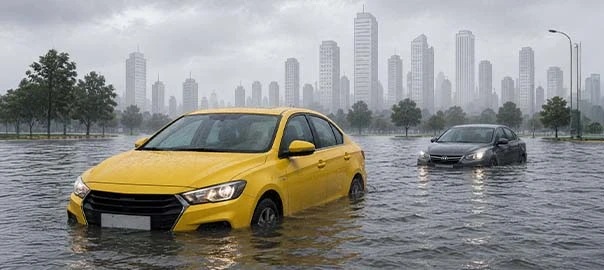
Parts of India, including Valsad district in Gujarat, have experienced extremely heavy rainfall in July 2026. As Valsad recorded over 1,100 mm of rainfall within 24 hours, it created a flood-like situation that damaged most vehicles in the area.
As images of numerous cars half-submerged in floodwater surfaced online, many were left wondering who would pay for the damage. This discussion brought car flood damage insurance into the spotlight. If you also own a car and are wondering whether your car insurance will cover flood damage, read this blog for clarity.
What is Flood Damage Coverage in Car Insurance?
Flood damage coverage in car insurance refers to the financial protection provided by insurers against damages and losses arising from flooding. While flood damage protection is included in comprehensive car insurance plans, it’s subject to exclusions, deductibles, and other terms specified in the policy.
You don’t receive unlimited protection in standard insurance plans. Hence, if you live in a flood-prone area, it’s wiser to upgrade your car insurance coverage by purchasing add-ons such as engine protection cover, zero depreciation cover, and roadside assistance.
Does Comprehensive Car Insurance Cover Flood Damage?
Yes, comprehensive car insurance does cover flood damage. However, it covers basic damage, such as damage to the vehicle body and upholstery. Regular comprehensive plans without any add-ons will not provide greater protection against flood damage.
Hence, if you want to protect your car’s engine against flood-related damages, you can include engine protection cover in the original policy.
You should carefully read the inclusions, exclusions, and other policy details to gain clarity on what’s covered. Based on this information, you can purchase relevant add-ons to strengthen the flood-damage car insurance coverage.
Types of Flood-Related Damages Usually Covered
Insurers usually cover the following types of flood-related damages –
Damage to the Vehicle Body
If the floodwater damages the car’s body panels, doors, roof, or other exterior components, the insurer will cover eligible repair and replacement costs. However, the coverage will be subject to the policy terms & conditions and applicable depreciation rates, other deductibles.
Electrical System Damage
Modern cars rely heavily on electronic components, which, once damaged, will require expensive replacements. If the car’s sensors, lighting system, or other electrical components get damaged, you can claim expenses for the repair or replacement of components explicitly included in the policy.
Interior & Upholstery Damage
Once floodwater enters the cabin, it can damage the car seats, floor carpet, roof lining, interior trim, and several other interior components. You can file a car flood insurance claim for these damages.
Total Loss Due to Flooding
If a car remains submerged in flood water long enough for repairs to become uneconomical, you can treat it as full vehicle loss. For example, if the car is swept away by floodwater and cannot be recovered, or if its repair cost exceeds 75% of its Insured Declared Value (IDV), such cases are generally treated as total loss or constructive total loss .
In such cases, insurers may pay the vehicle’s IDV in accordance with the policy’s terms and conditions. However, no depreciation will be charged in case of total loss of constructive total loss of the vehicle.
Engine Damage
Damages caused to a car’s engine are not covered in a standard comprehensive car insurance policy. However, if you have purchased the engine protection cover, then you can claim engine-related damages caused by floodwater.
Car Flood Insurance Claim: Step-by-Step Process
If your car has been damaged due to flood, you can use the following car insurance claim process to file an official claim application with the insurer.
Inform Your Insurer Immediately
You should notify your insurer about the flood and resultant car damage at the earliest. You can contact your insurer via their official website, mobile app, or helpline number. While informing, don’t forget to share your policy details, vehicle details, current location, and a brief description of the damage.
Prompt intimation will help initiate the claim process without any unnecessary delays. If you’ve purchased a car insurance policy from Shriram General Insurance, you can file claim intimation here.
File the Official Claim Form
Once you’ve informed the insurer, you can proceed with filing an official claim application. Visit the insurer’s website, navigate to their claim filing section, and provide the details requested on the screen. Be ready with the key documents, as you’ll need to upload them when filing the claim application.
After you have submitted the application and uploaded all required documents, wait for a surveyor to reach your location and assess the extent of damage. Once assessment and verification are finished, you’ll receive a claim approval/rejection depending on the case. For cashless repairs, you’ll receive a nod to have the repair done at a network garage upon claim approval.
Disclaimer:
Before you proceed with filing a claim, be mindful of this activity. If your car has been partially or fully submerged in floodwater, don’t try to start the car’s engine once the floodwater starts receding. Restarting a flooded car can cause more water to enter the engine, leading to consequential loss.
Such losses are not covered under the policy and may result in a claim being rejected. Hence, leave the car untouched until the surveyor visits the site for a physical inspection and damage assessment.
Flood Insurance Claim Process: Documents Required
| Serial No. | Document Required |
|---|---|
| 1 | Duly filed claim form |
| 2 | Copy of insurance policy |
| 3 | Vehicle’s Registration Certificate (RC) |
| 4 | Driving license |
| 5 | Repair estimates from an authorised garage |
| 6 | Your bank details for reimbursement |
| 7 | FIR (if required) |
| 8 | Pictures or videos showing the flood-related vehicle damage |
Common Reasons for Claim Delays or Rejection
Even if you’ve finished the flood claim process on time, you may face delays or even rejection for the following reasons –
Delayed Claim Intimation
You may face claim delays if you fail to notify the insurer about the flood-related car damage immediately of the loss/damage. You can file an official intimation by visiting the insurer’s website.
The longer the delay, the harder it becomes for the surveyor to determine the actual cause and extent of damage. It may slow down or affect the claim settlement process.
Repairing the Vehicle Before Inspection
If you’ve repaired the car before an official surveyor has finished the inspection, then the claim may get rejected. If you don’t want such rejections, leave the car untouched until the surveyor has finished the inspection and the insurer has given the nod to proceed with repairs.
Consequential Loss
Consequential loss isn’t covered in car insurance policies. If you try to start your car’s engine as soon as the floodwater recedes, it may lead to consequential losses that aren’t covered by policies. In such cases, your claim can get rejected.
Conclusion
Flooding isn’t uncommon during the monsoon season, especially in flood-prone areas. While you cannot prevent natural calamities like floods from damaging your vehicle, you can protect it by insuring it against potential losses. Investing in car flood damage insurance is the best step you can take to keep your vehicle financially protected.
If you’re looking for a dependable policy, consider exploring the comprehensive car insurance plan at Shriram General Insurance. It includes basic flood damage protection, but you’ll need to purchase additional add-ons for enhanced coverage.
FAQs
1. Do all car insurance policies provide flood damage protection?
No, policies like third-party insurance don’t provide flood damage protection as part of the coverage. You’ll find it in comprehensive and standalone own damage cover policies.
2. Does car flood damage insurance cover all types of flood-related damages?
No, the coverage is limited. For example, consequential loss isn’t a part of the coverage. Even engine damage isn’t covered, but you can include it by investing in an engine protection add-on.
3. Which add-ons should I purchase to enhance flood damage coverage?
You can purchase engine protection and zero depreciation add-on covers. They’ll help you get a higher claim payout by minimising deductibles, such as depreciation, and expanding the scope of coverage.
4. Do I have to pay extra money for upgrading flood-related damage coverage?
Yes, you’ll have to pay to expand the scope of coverage. People usually purchase add-ons for extra protection, and each add-on comes at an additional cost.
5. How fast should I inform the insurer about flood-related damages?
The earlier you inform the insurer, the better. However, ensure you notify the insurer immediately to avoid unnecessary claim delays.