

SUV vs Sedan vs Hatchback: Which Car Type is Best For You
15 June,2026
Updated:30 September,2026
0 min read

share


Copied
 757
757This blog shares a detailed SUV vs sedan vs hatchback analysis, so people can choose the right car type for themselves.
The Indian car market is at a very interesting stage. SUVs seem to be everywhere, sedans still have loyal fans, and hatchbacks continue to dominate most roads. With so many options available today, it’s normal for people to get overwhelmed by choices. This blog on SUV vs sedan vs hatchback will help you make an informed choice.
Understanding SUVs, Sedans, and Hatchbacks
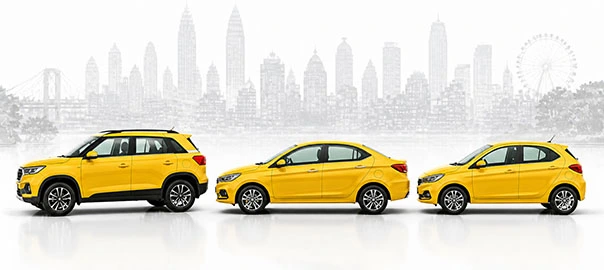
The hatchback vs sedan vs SUV India comparison is best understood when you have a clear idea of what each of these car types is.
SUVs
An SUV is a versatile car built for both city roads and rough terrain. It sits higher off the ground than most cars, which usually gives drivers a commanding view of the road ahead.
You should consider exploring SUVs if you want a versatile car with a spacious cabin and on-road + slight off-roading capabilities. They’re becoming increasingly popular due to their classic visual appeal, suite of features, and performance.
Sedans
A sedan is the usual classic car with a three-box structure for engine compartment, passenger cabin, and a separate boot. Appearance-wise, it’s sleek, modern, and sophisticated, which is why it easily commands attention.
Most sedans are also known for their ride quality, highway stability, and cabin comfort. Sedan cars in India are ideal for individuals who prioritise comfort above all.
Hatchbacks
Hatchbacks are compact cars that stand out for their effortless city driving. In these cars, the cabin and luggage space are connected through a rear hatch door.
Since they’re comparatively smaller in size, parking and navigating crowded city traffic isn’t difficult. Hatchback cars in India are a practical choice for city users because they generally balance affordability, fuel efficiency, and everyday convenience.
SUVs, Sedans, Hatchbacks – Top 5 Cars Available
Each car type, i.e., SUVs, sedans, and hatchbacks, features some of the best cars in India. We’ve covered the top 5 from each category for your convenience.
Top 5 SUVs
Here’s our pick for the top 5 SUVs in India –
| Attribute | Hyundai Creta | Tata Nexon | Mahindra Scorpio N | Maruti Suzuki Brezza | Kia Seltos |
|---|---|---|---|---|---|
| Power | 157.57 bhp | 113.31 bhp | 172.45 bhp | 101.64 bhp | 114 bhp |
| Torque | 253 Nm | 260 Nm | 400 Nm | 136.8 Nm | 250 Nm |
| Mileage | 18.4 kmpl | 24.08 kmpl | 15.42 kmpl | 19.8 kmpl | 16.5 - 19.4 kmpl |
| Seating Capacity | 5 | 5 | 6,7 | 5 | 5 |
| Price (Ex-Showroom Price in Delhi) | ₹10.79-₹20.05 Lakh | ₹7.37-₹14.22 Lakh | ₹13.49-₹24.95 Lakh | ₹8.26-₹13.01 Lakh | ₹10.79-₹19.99 Lakh |
Top 5 Sedans
Here’s our pick for the top 5 sedan cars in India –
| Attribute | Maruti Suzuki Dzire | Honda City | Hyundai Verna | Volkswagen Virtus | Skoda Slavia |
|---|---|---|---|---|---|
| Power | 80 bhp | 124.27 bhp | 157.57 bhp | 147.51 bhp | 147.51 bhp |
| Torque | 111.7 Nm | 253 Nm | 253 Nm | 250 Nm | 250 Nm |
| Mileage | 25.71 kmpl | 17.97 kmpl | 20-26 kmpl | 19.62 kmpl | 19.36 kmpl |
| Seating Capacity | 5 | 5 | 5 | 5 | 5 |
| Price (Ex-Showroom Price in Delhi) | ₹6.26-₹9.31 Lakh | ₹12-₹21 Lakh | ₹10.98-₹18.40 Lakh | ₹10.50-₹19 Lakh | ₹10-₹17.99 Lakh |
Top 5 Hatchbacks
Here’s our pick for the top 5 hatchback cars in India –
| Attribute | Maruti Suzuki Swift | Maruti Suzuki Baleno | Hyundai i20 | Tata Altroz | Tata Tiago |
|---|---|---|---|---|---|
| Power | 80.46 bhp | 88.50 bhp | 87 bhp | 72.49 bhp | 74.46 bhp |
| Torque | 111.7 Nm | 113 Nm | 114.7 Nm | 103 Nm | 96.5 Nm |
| Mileage | 25.75 kmpl | 22.94 kmpl | 20 kmpl | 18.5-23 kmpl | 28.06 km/kg (CNG engine) |
| Seating Capacity | 5 | 5 | 5 | 5 | 5 |
| Price (Ex-Showroom Price in Delhi) | ₹5.79-₹8.80 Lakh | ₹5.99-₹9.10 Lakh | ₹5.99-₹10.44 Lakh | ₹6.30-₹10.77 Lakh | ₹4.60-₹7.92 Lakh |
Fuel Efficiency and Cost of Ownership: What’s the Real Expense?
In the quest to find the best car type in India, many people forget to evaluate the real expenses associated with each car. It can cause them difficulty in the future. The real expenses of owning a car go beyond the amount you pay at the showroom during purchase.
Recurring fuel consumption, maintenance cost, insurance premiums, and routine servicing charges are a few of the real expenses that you’ll continue paying to keep your car running.
Hence, when you evaluate cars, don’t just compare them across categories such as hatchback vs sedan vs SUV in the Indian context. Check the associated real expenses for all shortlisted options to choose a car whose ownership and maintenance costs are easily manageable.
What Really Matters – Space, Comfort, and Practicality
The SUV vs sedan vs hatchback decision can become easier if you stop focusing only on the car’s appearance and start paying attention to how the car will fit into your everyday life. Space, comfort, and practicality are equally important because they influence your overall car ownership experience.
If you frequently travel with your family and friends or carry sizable luggage, then space becomes an important consideration. Comfort is equally important if you regularly drive long hours for work purposes. Lastly, practicality should also be on your mind when selecting a car, as it will improve your day-to-day driving experience.
If you frequently navigate crowded city roads and tight parking spaces, practicality becomes extremely crucial. If you’re someone who lives in metro cities and are seeking everyday driving comfort, then consider hatchbacks over other options.
You can choose sedans if you want a balance of sophisticated exterior styling, comfortable cabin, and good performance. SUVs deserve your attention if you want to use the car for both city driving and occasional off-road driving.
SUVs, Sedans, Hatchbacks: Which One is the Best Car for a Family in India
People planning to buy the best car for their family in India shouldn’t limit their search to a specific car type. If you’re wondering whether to choose an SUV, a hatchback, or a sedan, we’d suggest conducting an in-depth comparative analysis of each. The following comparison table can make your work slightly easier.
| Basis of Differentiation | SUVs | Sedans | Hatchbacks |
|---|---|---|---|
| Body Design | Typically has a taller and more upright body profile with a stronger road presence | Uses a three-box design with separate engine, passenger, and luggage compartments | Uses a two-box design where the passenger and cargo areas are connected |
| City Practicality | Large SUVs may feel less convenient in congested streets or tight parking spaces | Generally provides a good balance between comfort and everyday usability | Commonly preferred for city driving, as its compact dimensions make driving and parking easier |
| Road Condition Adaptability | SUVs are designed to drive on mixed road conditions, uneven surfaces, and even varying terrain quality | Commonly used on paved city roads and highways | Works well for everyday urban roads and normal driving conditions |
| Ideal For | People seeking versatility, family-oriented practicality, and adaptability across varying road conditions | Anyone who prioritises a healthy balance of comfort and smooth driving experiences | Ideal for city commuters, first-time buyers, and those seeking everyday driving comfort |
| Main Trade-Off | Although SUVs are incredibly versatile, they can sometimes come with compromises in mobility and ownership costs, depending on the car’s size | Cargo flexibility can become more limited than some alternatives | Despite being a practical vehicle, its small size can become a big concern for people with large families. |
SUVs, Sedans, Hatchbacks – Benefits
The SUV vs sedan vs hatchback analysis is incomplete without exploring their benefits. Here’s a quick glimpse into the key benefits of SUVs, sedans, and hatchbacks for your convenience.
| Benefits of SUVs | Benefits of Sedans | Benefits of Hatchbacks |
|---|---|---|
|
|
|
Conclusion
The Indian car market provides numerous options across SUVs, hatchbacks, and sedans. While this access to a wider range of options helps maintain competitiveness, it also confuses people and affects their decision-making. Hence, we’ve shared a detailed SUV vs sedan vs hatchback analysis in this blog, so you can choose the right car type for yourself.
Once you’ve finalised the car type and precise car model you want to purchase, don’t forget to secure it under a dependable Car Insurance policy. You may explore our Comprehensive Car Insurance policy if you prioritise good coverage and ample personalisation options.
FAQs
1. SUV vs sedan vs hatchback: which is better?
There is no universally correct answer to it. Any car type that fits your lifestyle, budget, and driving needs is better than others that don’t.
2. Are SUVs expensive to maintain?
Not always. If you’re buying compact or mid-size SUVs, they may be reasonably affordable to maintain. However, large, premium SUVs can be slightly on the expensive side for routine maintenance.
3. Which car is ideal for city driving?
Hatchbacks are usually better for city driving because their compact size helps them navigate traffic and tight spaces more easily.
4. Which are the top SUVs for Indian families?
Hyundai Creta, Mahindra Scorpio N, and Kia Seltos are good SUV options for Indian families.
5. Which car type is better for highway driving?
Both SUVs and sedans are good for highway driving. They usually provide incredible highway mileage and a smooth, comfortable driving experience.