

New Driving License Rules in India 2026: What Changed?
10 June,2026
Updated:30 September,2026
0 min read

share


Copied
 9740
9740This blog provides a detailed briefing on the new Driving License (DL) rules in India.
Getting a driving license in India used to be complex and tiresome. The never-ending RTO queues, repeated office visits, long lists of documents, etc., were common during the process of applying for a driving license a decade ago. The government took note of the challenges people faced and began rolling out changes to improve the experience for every citizen.
Hence, if you’re applying for a driving license in 2026, the process may look far different from what it looked like in 2020 or before. This blog covers all the new driving license rules 2026 to keep you updated on the latest compliance requirements.
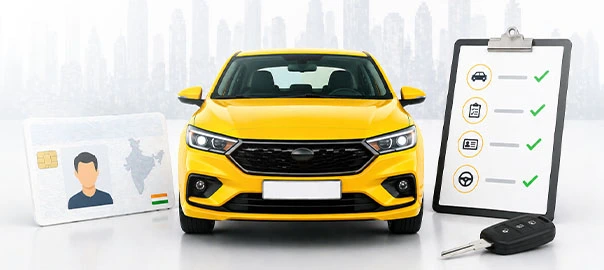
Understanding the New Driving License Rules 2026: Snapshot of Key Changes
Any person who plans to apply for or renew their driving license should be aware of the latest applicable guidelines. It will help you comply with the latest driving license system in India, increasing your likelihood of timely license approval or renewal. Here’s a snapshot of the new driving license rules in India.
Driving Tests Are No Longer Restricted to RTO Centres
Previously, applicants had to appear for practical driving tests at the Regional Transport Offices (RTOs). Since it was the only venue for driving tests, people would face extremely long queues and waiting periods.
However, new Driving License (DL) rules in India have solved this problem. Under the new rules, applicants can now take a driving test at government-authorised private institutions. It has made the entire driving license system in India more decentralised, reducing pressure on RTO and improving the experience for countless applicants.
Before proceeding with the test, please verify the accreditation status of the private institution to determine if it has been formally approved by the State Transport Authority to conduct driving tests.
The Five-Challan Rule
It’s one of the strictest rules rolled out by the government. It states that, starting 1st January 2026, if a person receives 5 or more challans in one calendar year, their driving license may get disqualified. All challans must be cleared within 45 days of issuance to avoid license disqualification.
If you fail to do so, your vehicle can get blacklisted. As a result, you won’t even be allowed to carry out basic activities, such as a change of address or a transfer of ownership, until all pending challans are paid.
Greater Emphasis on Structured Driver Training
Traditionally, many people relied on family members, local instructors, or informal learning methods before appearing for a driving test. It was common because there wasn’t a structured, formal, government-approved centre that could help people learn driving skills properly.
It’s no longer the case. The government has allowed accredited driver training centres to provide remedial, refresher, and other courses that can help people learn driving skills. These centres also provide industry-specific training.
The shortage of skilled drivers has pushed the government to take this step. If you learn and clear the driving test from these centres, you’ll be exempt from the driving test that’s usually held at RTOs for license issuance.
Process is Becoming More Digitised
Earlier, people had to make repeated visits to RTO offices to submit forms, schedule appointments, get their documents verified, and more. It led to a lot of time wastage and exhausted applicants. Thankfully, much of the process is now being digitised to save people’s time and make it hassle-free.
Whether you want to fill out an application form for driving license issuance, set an appointment for a driving test, or make a payment, you can do everything online at your preferred time.
Why Are Driving License Rules Changing in 2026?
Although there are several reasons behind the introduction of new driving license rules in 2026, the two primary reasons include the need to -
- Address the shortage of skilled drivers on Indian roads
- Improve road safety
India has the highest road fatalities globally. In 2023 alone, there were nearly 4.80 lakh road accidents and 1.73 lakh deaths. Hence, the government plans to instill good and responsible driving habits through these new rules.
It will eventually improve road safety in India. There’s also an additional reason: improving people’s experience during the driving license application process, which is why you can notice the rapid digitisation of the driving license system in India.
Do You Have Toll Dues? Key Vehicle Services Will Get Blocked
Even after being registered with FASTag, some vehicles cross toll plazas without actually paying the toll. Whether you own a personal or commercial vehicle, unknowingly making this mistake can expose you to severe consequences.
Unpaid toll dues can now block your issuance of a No Objection Certificate (NOC). Without this NOC, you cannot transfer ownership of your vehicle after selling it. Re-registering your vehicle in a different state and getting the Certificate of Fitness can also be stopped by authorities.
For commercial vehicles, obtaining a national permit can become impossible if toll dues are unpaid. Hence, ensure your vehicle pays toll fees at all relevant stops.
Driving License Age Limit in India
The new rules for drivers in India clearly prescribe the age limit for different types of vehicles. Here’s a quick snapshot of the age limit for a driving license in India –
- Kids aged 16 can apply for a learner’s license to ride a gearless motorcycle (up to 50cc) with parental consent.
- To drive a motorcycle with a gear (above 50cc), a person has to be at least 18 years old.
- Anyone who wants to legally drive a light motor vehicle (LMV), such as a car or jeep, on Indian roads must be at least 18 years old.
- For a commercial vehicle driving license, the applicant must be at least 20 years old and must possess prior LMV license experience.
Documents Required for Driving License
You cannot get a driving license in India without the following documents –
- Proof of Age (Birth certificate/Aadhaar card/PAN card/10th grade marksheet)
- Proof of Address (Aadhaar card/Passport/Rent agreement/Electricity or other utility bills)
- Duly filled application form (Form 2 for a learner’s certificate)
- Form 1A (medical certificate), duly signed by a government medical practitioner, for a commercial vehicle license and applicants aged 40 and above
- Passport-sized photographs
These are a few of the standard documents that you’ll need to apply for a driving license in India.
Driving License Test Process Under New Rules
Under the new Driving License (DL) rules in India, you have the option to apply for a driving test using two methods:
Traditional Method
It’s the age-old RTO method where you first learn to drive using any formal or informal learning method. Once you’ve developed the knowledge and skills, you submit your driving license application with other relevant documents online on the RTO website to schedule a driving test. You appear for the test on the scheduled date. If you clear the test, you become eligible to receive the driving license.
New Method
The new rules have simplified the process for obtaining a driving license. Under these rules, you can enrol in a driver training program in a government-approved private institute. These institutes provide formal, structured training to help people develop responsible driving habits, skills, and knowledge.
After finishing the program, you can apply for their internal examination (theory plus practical). To clarify, much of the emphasis is given on practical skills to evaluate the applicant’s real-world driving skills. Upon successful completion, you receive a certificate that can be used to obtain a driving license.
Steps to Apply for an Indian Driving License Online?
If you have completed your training and are ready to apply for a driving license, follow the step-by-step process outlined below.
- Visit the official Parivahan website, and choose your state.
- Apply for a learner’s license first if you’re a first-time applicant. Choose the learner’s license application option and follow the steps as you see on the screen.
- Upload all the necessary documents and pay the applicable fees.
- Depending on the applicable process, some applicants may have to finish the learner-related assessment requirements before proceeding to the next stage.
- Schedule the driving test appointment on the available date.
- Appear for the test and give your best to clear it.
- Once finished, a verification process will be conducted, after which you’ll receive your permanent driving license.
Benefits of New Driving License Rules
The Indian government has thoughtfully introduced new Driving License (DL) rules because they provide the following benefits.
No More Repeated RTO Visits
Earlier, people had to visit the RTO several times for application submission, document verification, appointment scheduling, and even to take the official driving test. It was extremely time-consuming for applicants.
With the new rules, applicants can finish most of the driving license process online. They can also give the driving test at a government-authorized private institute. Besides simplifying the process, these rules have also made it more people-centric.
Improved Focus on Instilling Incredible Driving Skills
Under the new rules, you can enroll in a government-accredited driver training centre. These institutes will provide you with formal, structured training to help you develop excellent driving skills. This formal training facility was previously unavailable, which affected the quality of drivers on Indian roads.
Reduced Administrative Burden on Transport Offices
RTOs were overburdened with never-ending appointments, form submissions, and driving tests conducted at their premises. Since it was the only venue for people to apply for and take a driving test, the offices became very busy. The new rules have decentralised the driving license system in India, making the process convenient for both applicants and RTOs.
Conclusion
Driving license rules in India have undergone significant refinements over the years. The new rules, effective in 2026, aim to simplify, streamline, and speed up the process for both individuals and the authority. If you’re planning to apply for a new driving license in India, ensure you stick to all the rules discussed in this blog.
Having a driver’s license will make you feel more secure and confident while driving. If you also want financial security for your car, get it insured with the Comprehensive Car Insurance policy from Shriram General Insurance.
FAQs
1. Can I get a driver’s license without a learner’s license?
No, you cannot. Anyone who wants to get a permanent driving license must first secure a learner’s driving license.
2. Has the driving test been removed under the new driving license rules in India 2026?
No, the driving test is still mandatory. The new rules have only given people the flexibility to give it at a government-approved training centre.
3. Can Indian citizens apply for a driving license online?
Yes, you can. Visit the official Parivahan website to fill out and submit your driving license application.
4. Do unpaid tolls cancel a driving license?
No, unpaid tolls don’t cancel a driving license, but they do blacklist your vehicle from availing all key vehicle-related services.
5. What is the minimum age to get a driver’s license for a regular car?
An applicant must be at least 18 years of age to apply for a regular driving license.