Supreme Courts New Third-Party Insurance Rule Explained
28 October,2026
Updated:28 October,2026
0 min read

share


Copied
 41
This blog simplifies the new Supreme Court third-party insurance rule so every driver is aware of the latest legal compliance requirements.
When you buy a new car or two-wheeler, you don’t just pay the vehicle price before taking it onto Indian roads. Numerous cost components are included in the vehicle’s on-road price, and insurance is one of them.
Since India’s Supreme Court issued a new directive on 4th August 2026 on insurance policy duration, you can expect a slight increase in vehicles’ on-road prices. This blog explains the changes to the third-party insurance rule and what they mean for you.
What Is Third-Party Insurance and Why Is It Mandatory?
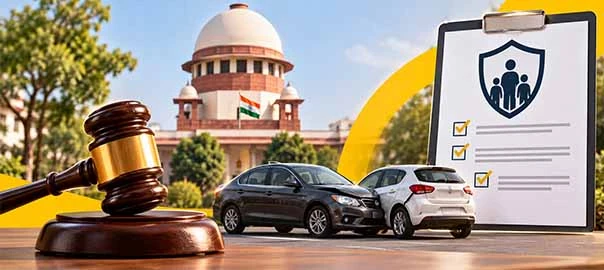
Third-party insurance is vehicle insurance that protects people, other than the vehicle owner, if the insured vehicle causes an accident leading to a third party’s death, injuries, or property damage.
It’s mandatory under Section 146 of India’s Motor Vehicles Act to protect victims of road accidents. Since road accidents can create substantial financial liabilities for victims and their families, the government mandated a third-party policy to ensure they receive timely compensation.
What is the Supreme Court’s New Third-Party Insurance Rule?
The Supreme Court has made significant changes to the existing car insurance rules to enhance road safety and provide recourse to road accident victims. Under the Supreme Court’s ruling on 4th August 2026, new cars and two-wheelers must now be purchased with 4-year and 6-year insurance policies, respectively.
Previously, the mandatory policy period was 3 years for cars and 5 years for two-wheelers. The Supreme Court’s new insurance rule adds one year to promote coverage continuity and protection.
Besides extending the policy duration by one year, India’s Supreme Court has also asked authorities to design a pilot project that denies fuel access to uninsured vehicles at petrol pumps. To clarify, it’s a proposal, not a rule yet.
Suggestions have also been made to integrate ANPR cameras installed on roads, highways, toll plazas, etc., with insurance databases such as the VAHAN portal. It will make it easier to identify uninsured vehicles and issue automatic challans for non-compliance.
Why Has the Supreme Court Extended the Third-Party Insurance Period?
The Supreme Court’s decision to make the aforesaid changes to the motor insurance rules is rooted in -
- Improving poor compliance with existing insurance laws
- Making it easier for road accident victims to receive rightful compensation without getting entangled in lengthy legal proceedings
The Court highlighted that despite insurance being mandatory, nearly 56% of vehicles on Indian roads remain uninsured. If any of these uninsured vehicles cause a road accident, victims may struggle to receive compensation, leaving them struggling with the financial implications the accident caused.
Adding the insurance duration by one more year can address this problem to a certain extent. This ruling matters because the scale of road accidents taking place on Indian roads is concerning. Nearly 5,00,000 road accident cases are reported every year in India, and approximately 20 people die every hour due to these accidents.
Hence, extending the third-party insurance period will ensure that any third-party damage caused in accidents during this period remains covered, so victims receive faster compensation.
How Will the New Third Party Insurance Rule Affect Vehicle Owners?
As the latest car insurance rules apply to new cars and two-wheelers, vehicle owners should be aware of their impact. The biggest and probably the most direct impact will be financial.
Since the mandatory third-party insurance commitment has become longer, the insurance component can increase the vehicle’s on-road price. Although the initial purchase cost may become higher, it will also give you an extra year of insurance coverage.
What Should You Check Before Buying Car Insurance?
Since car insurance is an ongoing commitment and protection, avoid buying any random policy. Whether you’re planning to buy comprehensive, standalone own-damage, or third-party insurance, read the policy papers carefully to understand what’s included and what’s not covered.
Read clauses on inclusions, exclusions, deductibles, add-ons, no-claim bonus, etc., to gain a clearer understanding of policy coverage and other key aspects. You should also check the list of network garages to identify how many reliable garages are located near your location.
This will make it easier to get cashless repairs during emergencies. You can also review the policy duration, premium amount, type of coverage, and the insurer’s past claim settlement ratio.
Does the New Rule Apply to Existing Cars and Two-Wheelers?
No, the Supreme Court’s third-party insurance rule is applicable only to new cars and two-wheelers. Since the Supreme Court ruling was passed on 4th August 2026, any vehicles purchased before this date are not impacted by the changes. They can continue with their existing insurance plan.
What is the Impact on the General Insurance Industry?
The new motor insurance rule impacts both vehicle owners and insurers. We’ve already discussed the impact on vehicle owners in a previous section. Since the insurance duration has been increased, insurers will have to update their policy documents, pricing, marketing collateral, etc., to reflect the changes.
Overall, the change can give a boost to the general insurance industry. Insurance companies can use this opportunity to expand insurance penetration and encourage sustained compliance among vehicle owners.
Does Third-Party Insurance Cover Damage to Your Own Vehicle?
Third-party insurance, by design, doesn’t cover damage or loss to your own vehicle or to the driver/owner during a road accident. It only covers the policyholder’s financial liability for third-party damage, injury, and death, subject to the policy’s terms.
To cover damage to your own vehicle, you must buy either a comprehensive insurance plan or standalone own-damage policy. For enhanced coverage, you can also buy add-ons like engine protection cover, consumables cover, and zero depreciation cover with the primary insurance policy.
Conclusion
Every vehicle is legally required to have at least third-party insurance, yet more than half of Indian vehicles on the road remain uninsured. This has created challenges for road accident victims in receiving rightful compensation for the damages and injuries caused.
Hence, India’s Supreme Court increased the policy duration by one year. We’ve already covered every key detail about this Supreme Court ruling and how it impacts drivers. Ensure you remain legally compliant with these changes.
If you own an uninsured vehicle, secure it under a relevant Car Insurance plan as soon as possible. You can explore our Third-Party, Comprehensive, and Standalone Own-Damage policy.
FAQs
Does the new Supreme Court ruling apply to old cars and two-wheelers?
No, the ruling doesn’t apply to vehicles purchased before 4th August 2026. If you have an old car or bike that you purchased before this date, it can continue with the existing insurance plan.
What changes has the Supreme Court made to ensure stricter insurance compliance?
The Supreme Court has increased the mandatory insurance duration from 3 years to 4 years for cars. For two-wheelers, the duration has been increased from 5 to 6 years. A ‘No Insurance, No Fuel’ proposal is also being explored to ensure stricter insurance compliance.
Is third-party insurance compulsory for cars?
Third-party insurance is the base insurance requirement for every Indian vehicle. If you want legal compliance and own-vehicle protection, you can consider purchasing comprehensive insurance instead of a third-party plan. Alternatively, you can buy a third-party policy and a standalone own-damage policy.
How will the Supreme Court’s third-party insurance rule impact people?
The Supreme Court’s ruling on extending the third-party insurance duration will increase the on-road price of vehicles. If you’re planning to buy a new car or bike, you may have to pay a higher upfront cost because of the longer insurance commitment.
Has the ‘No Insurance, No Fuel’ rule been legally approved by the Supreme Court?
No, it’s currently under consideration. The Supreme Court has asked authorities to design a pilot project to test its feasibility. It’s still a proposal that may become a rule if the pilot project becomes successful.