

How to Maximise Your EV Battery Range While Driving in Indian Conditions in 2026
19 March,2026
Updated:30 September,2026
0 min read

share


Copied
 1828
1828EVs have become common on Indian roads. While it’s a welcome step towards a green environment, people who purchased EVs are facing a common problem.
They’re unsure how to make the most of their EV battery range, especially in real-world Indian conditions where extreme heat, traffic congestion, and uneven roads can quickly affect efficiency. If you have similar doubts, this blog is for you.
We’ve covered the key EV battery management and EV maintenance tips that can help you boost your EV’s battery range, so read until the end.
Understanding the EV’s Range
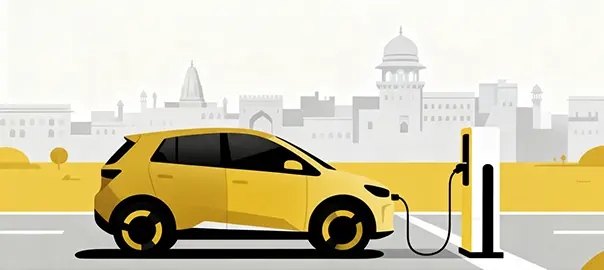
People new to EVs might not have a clear understanding of what EV range exactly means. It’s simply the maximum distance an EV can travel on a full battery charge. If you hear someone saying that their EV has a range of 400km, it means their car can travel up to 400km on a single charge.
This range varies significantly based on multiple factors. Some key factors include your driving speed, road terrain, and driving style. As an EV owner, you can extend your EV range by following the EV driving and maintenance tips listed in this blog.
EV Driving Tips for 2026 You Must Know
You can noticeably improve your EV’s range by implementing the following EV driving tips in 2026.
Use Regenerative Braking Smartly
Regenerative braking converts the vehicle’s kinetic energy into electricity as it slows. Hence, if you can anticipate traffic and release the accelerator early, the system will recover more energy.Over time, this recovered energy will extend the driving range. We highly recommend this tip to EV owners who regularly drive in the city’s stop-and-go traffic.
Maintain Moderate Speed
Driving your EV at high speeds can increase its aerodynamic drag. It forces your EV’s motor to consume more electricity to maintain this high-speed motion, reducing battery efficiency. The best way to avoid it is by driving at a moderate speed.Manage Climate Control Usage
Air conditioning and cabin heating draw energy directly from the EV’s battery. It’s a key reason why excessive use of climate control can reduce the available driving range, especially during long journeys. A smart way to extend EV range in such conditions is to use eco mode to maintain comfort while minimising unnecessary battery consumption.Driving Habits for Extending EV Range
Extending your EV range doesn’t have to be complicated. You can do so by simply changing your driving habits. We’ve highlighted a few driving habits that deliver tangible results.
Avoid Carrying Excessive Weight
As an EV owner, you should avoid carrying extra luggage while driving. Higher load requires higher energy from the EV battery, which puts extra pressure on the car’s motor. The smartest move you can make is to remove all unnecessary cargo and accessories to reduce energy demand. It will gradually improve the EV’s overall driving efficiency.Always Maintain Proper Tyre Pressure
Under-inflated tyres can increase your EV’s rolling resistance. It will force your car to consume more energy to maintain its speed, straining the battery. Hence, you should always maintain a healthy tyre pressure to improve EV’s range and driving efficiency.Maintain Steady Driving Speed
Frequent acceleration and braking can drain your EV’s battery. Hence, make it a habit to drive at a steady pace so the motor can operate efficiently, reducing unnecessary battery consumption.Charging Practices for Battery Longevity
EV owners seeking effective EV battery management tips will benefit greatly from the following charging practices.
Avoid Full Charging Every Day
If you charge your EV battery every day to full 100%, then you’re unknowingly putting excessive stress on your car’s lithium-ion battery cells. Instead, maintain a battery charge between 20% and 80% to help reduce long-term degradation. You should charge your EV to 100% only before long trips.Use Chargers Recommended by EV Manufacturers
You can also maintain your battery’s health and longevity by using charging equipment recommended by EV manufacturers. These chargers ensure that voltage and current remain within safe operating limits, making it easier to maintain stable charging conditions and protecting battery health.Avoid Deep Discharging
It’s a common charging mistake that many EV owners make. The mistake is letting the battery drop to extremely low levels before charging it. Anyone who follows this charging approach is putting excessive stress on the battery cells, quietly damaging them. Always recharge the battery when it still has a decent charge left to protect its performance.External Factors and EV Maintenance Tips
Awareness of the following external factors and EV maintenance tips will help you further extend your car’s EV range.
Temperature Conditions
Driving your EV regularly in extreme heat can accelerate battery degradation. Similarly, driving it in incredibly cold temperatures can temporarily reduce battery efficiency. You can protect your car by parking it in shaded areas. You can also secure it with a high-quality car cover and limit prolonged exposure to extreme heat.Tyre Condition
You can experience higher rolling resistance when driving with worn tyres. It significantly reduces battery efficiency. You can avoid it by regularly inspecting your tyre’s pressure to ensure it’s neither underinflated nor overinflated.Road Terrain
Driving on steep inclines, especially on mountainous tracks, requires more energy than driving on flat roads. Hence, avoid frequent uphill driving in your EV to preserve its driving range.6 Tips to Prolong Your EV Car’s Battery Life – Car Guide
The following EV maintenance tips will help you improve your EV’s battery life.
Avoid Excessive Heat Exposure
High temperatures accelerate chemical reactions in lithium-ion batteries, gradually reducing their capacity. Hence, take relevant measures, such as parking the car in shaded areas or using good car covers, to limit heat exposure.Limit the Use of Fast Charging
Some EV owners recommend using DC fast chargers because they can charge your EV’s battery faster. Although they’re convenient, frequent use can damage your car’s battery.Since they deliver electricity at very high power levels, more heat is generated inside the battery. You should only use DC fast charging for occasional, emergency situations. Slower AC charging is still a better choice for daily charging needs.
Keep the Battery Management Software Updated
Modern EVs rely on sophisticated battery management systems that control charging behaviour, temperature regulation, and energy usage. Manufacturers frequently release EV software updates to improve the battery’s efficiency and protection. Ensure you install these updates promptly.Store the Vehicle Properly During Long Idle Periods
If you plan not to use your EV for several weeks for any reason, don’t let it sit idle on a near-zero charge. You must always keep the battery at a moderate charge level of 40% to 60% to maintain its stability.Drive Carefully
Your driving habits affect your car’s battery more than you think. If aggressive acceleration and sudden braking are part of your regular driving, then change these habits at the earliest. They draw more power from the battery over short periods, which puts unnecessary strain on the battery cells and can damage them over time.Maintain Moderate Charge Levels
Lithium-ion batteries experience less stress when operating at a moderate charge. We’re talking about a charge range between 20% and 80%.So, avoid these two situations - charging the EV to 100% frequently and letting the charge drop close to zero. Both situations can accelerate chemical wear in the cells. A safe approach is to keep the battery in the 20% to 80% range.
Why is it Important to Take Care of EV Car Batteries
The battery is the most critical part of any EV as it determines how your car will perform, including its driving range. You can treat it as the main component of the EV. If you want to enjoy a good driving range and performance, then you must take good care of your car’s battery.
What Affects EV Battery Capacity?
Many factors affect EV battery capacity. The key factors include – All lithium-ion batteries lose capacity over time due to internal changes. This natural aging process is unavoidable, but you can slow it down by implementing the EV driving tips for 2026 we shared above. Frequent fast charging, repeated deep discharging, and consistently charging the battery to 100% can put excessive stress on battery cells. Over time, these habits can accelerate battery degradation, reducing its usable capacity. The ambient (surrounding) temperature in which you drive your EV plays a major role in battery health. For instance, if you drive your EV for extended hours in extreme heat, it will accelerate chemical degradation in the battery cells. If you live in a cold region with extremely cold temperatures, then it can temporarily reduce the battery’s available capacity. If you have aggressive driving patterns, such as rapid acceleration and sudden braking, your car will always draw more power from the EV battery. Repeated high-energy demand increases thermal stress on battery components, leading to long-term capacity loss.
What Impacts EV Range the Most?
Multiple factors affect EV range, including your driving speed and style. Your climate control usage, outside temperature, and the road terrain you drive on also influence the EV range. We’ve discussed all these factors in detail in previous sections, so you can review them again for clarity.
Final Thoughts
EV owners cannot risk neglecting their EV’s battery range, as it directly affects the car’s overall performance. This maintenance can become especially challenging in India’s unique driving conditions. However, you can still preserve the battery’s range by following the EV driving tips we shared in this blog.
If you're still concerned about battery damage, consider investing in relevant EV Car Insurance for financial security. You can explore the Car Insurance plans at Shriram General Insurance, as we provide a range of plans to cover different cars.
FAQs
1. Is it safe to charge my EV to 100% every day?
Yes, it’s safe. Yet, you should try to keep the charge between 20% and 80% to maintain your battery’s range. You can charge to 100% before occasional long trips.
2. How can I protect my EV’s battery from extreme temperatures?
While you have multiple options, start by parking your EV in shaded areas. You should also cover your EV with a high-quality car cover to maintain the temperature inside the car.
3. Do my driving habits affect my EV’s battery?
Yes, they do. If your regular driving habits include applying sudden brakes and rapid accelerations, they will gradually damage your car’s battery.
4. What driving tips should I follow to extend the EV battery’s range?
There are many tips you can follow, such as driving at a consistent, steady speed, using fast chargers sparingly, and limiting EV use on uphill inclines.
5. Why should I prioritise maintaining EV battery’s health?
Every EV owner should prioritise maintaining their car’s battery health, as it directly affects the car’s performance.