


Engine Carbon Cleaning: When Do You Really Need It and Is It Worth The Cost?
16 March,2026
Updated:30 September,2026
0 min read

share


Copied
 4543
4543This blog explains what carbon engine cleaning is, how it works, and whether it’s worth the cost.
If you mostly drive in stop-and-go traffic and take short trips, your car’s fuel efficiency and performance may drop after a few years. You can credit carbon buildup on your car’s engine for this development.
However, you can prevent any drop in vehicle performance by investing in routine engine maintenance, especially engine carbon cleaning. We’ve covered everything about engine carbon cleaning in this blog, so ensure you read it until the end.
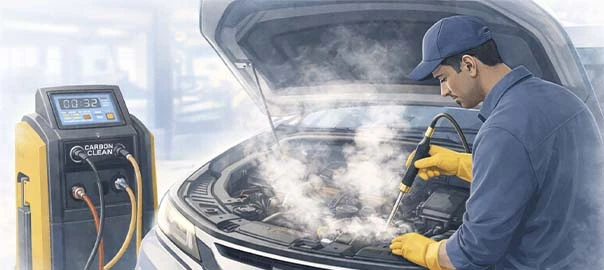
What is Engine Carbon Cleaning?
Engine carbon cleaning is a maintenance process that removes carbon deposits from your car’s engine. When petrol or diesel burns over thousands of kilometres, it doesn’t burn 100% cleanly.
Tiny unburned particles are left behind, which later transform into carbon deposits that cling to critical engine parts, such as intake valves, piston crowns, and fuel injectors.
If left unchecked, these carbon deposits can begin to restrict airflow and fuel spray patterns, gradually reducing engine efficiency and smoothness. You can use carbon cleaning as a preventive measure to dissolve these carbon buildups. It will help you restore a cleaner combustion environment.
Is Engine Carbon Cleaning Worth the Cost?
Engine carbon cleaning is worth the cost if your car is showing signs of reduced mileage and rough idling. If you notice increased smoke and sluggish acceleration, then also you can benefit from engine carbon cleaning.
These are all signs of excessive carbon buildup, which can be promptly addressed through engine carbon cleaning. However, this service won’t benefit you much if your car is already working fine with no performance issues. It’s best to avoid it if your car is functioning smoothly.
How Does Carbon Cleaning Work?
The engine carbon cleaning process may vary depending on the cleaning method and the type of engine being cleaned. If you want to understand the basic working process, then the following points are sufficient.
Initial Inspection and Diagnosis
A technician first inspects your engine to determine whether carbon buildup is the actual cause of your vehicle’s reduced performance or if another issue is causing the problem. If excess carbon buildup is the cause, the technician will proceed to the next step.Accessing the Intake or Fuel System
Carbon deposits usually accumulate in intake valves, fuel injectors, the combustion chamber, and other areas. In some engine designs, certain components are partially accessed to let cleaning agents reach the affected area.For mechanical cleaning, such as walnut blasting, parts of the intake assembly may need to be temporarily removed to expose the intake valves directly.
Applying the Primary Cleaning Method
This step will vary based on the cleaning method you’ve chosen. In India, you usually have three cleaning options - chemical cleaning, hydrogen (HHO) cleaning, and walnut blasting. Here’s how each method would work.Chemical Cleaning
For chemical cleaning, the technician will introduce a specialised solvent into the intake system while the engine is running. This chemical will soften and dissolve lighter carbon particles, which will then be burnt and expelled throughout the exhaust system. Choose chemical cleaning if your engine has mild to moderate carbon buildup.Hydrogen (HHO) Cleaning
In this method, a specialised machine is used to generate hydrogen gas through electrolysis. This gas is fed into the intake system while the engine runs. Upon entering the combustion environment, hydrogen begins to loosen and break down carbon deposits, making them easier to remove.Walnut Blasting
It is the mechanical cleaning method used primarily for direct injection petrol engines. As the name highlights, this method involves blasting crushed walnut shells at intake valves using compressed air.The crushed walnut shells are hard enough to scrape off carbon but soft enough not to damage the engine’s metal components. It’s the most effective engine carbon cleaning method for heavy, hardened valve deposits.
Clearing and Stabilising the Engine
After the carbon deposits are loosened or removed using step 3, the technician runs the engine at varied RPM levels. It helps burn off any remaining carbon residue, restoring the engine’s original combustion patterns. If any carbon debris is left behind, it will eventually be removed through the car’s exhaust system.Final Check-up
The last working step is a thorough post-cleaning assessment. At this stage, the technician will evaluate idle smoothness, throttle response, and engine sound. He will also look for diagnostic codes (if any) to determine whether the engine is fully free of carbon buildup.What are The Key Benefits of Engine Carbon Cleaning?
The benefits of engine carbon cleaning are plenty. We’ve covered the key benefits for your reference.
Improved Engine Performance
Carbon cleaning efficiently removes stubborn carbon deposits from a car’s engine. The result is restoration of proper airflow and fuel combustion. It will benefit you by making the engine run smoother and ensuring it responds better to acceleration.Better Fuel Efficiency
Carbon buildup can disrupt the air-fuel mixture, leading to inefficient combustion. It can be fixed by carbon engine cleaning. This simple cleaning service can help the engine burn fuel more efficiently, improving car mileage.Smoother Idling
If your vehicle’s engine has accumulated layers of stubborn carbon and soot, it can cause unstable combustion at low RPM. You can use engine carbon cleaning to stabilise engine operations. It will also reduce rough idling and vibrations.Prevention of Long-Term Engine Issues
Heavy carbon buildup can contribute to knocking, injector clogging, and airflow restriction. All of these can collectively cause problems with your car’s engine. Routine engine maintenance, especially carbon engine cleaning, can reduce the risk of such performance-related problems over time.How Important is Engine Maintenance
Engine maintenance is extremely important because it’s the car’s core mechanical system, powering your vehicle. Simply maintaining it can improve your vehicle’s overall performance. The following points will give you better clarity (and strong reasons) on why engine maintenance is important.
Improves Fuel Efficiency
An engine with stubborn carbon buildup will consume more fuel and have to work harder to deliver the expected driving range. It will gradually increase your fuel expenses. It isn’t the case with carbon-free, healthy engines.Enhances Reliability and Stability
Poorly maintained engines are more prone to breaking down mid-drive. It can leave you stranded in the middle of nowhere. You can avoid such unsafe situations through routine engine maintenance. This simple maintenance technique will ensure consistent and reliable engine performance, especially during long drives or multi-day road trips.Maintains Power and Performance
A healthy car engine will always deliver smoother acceleration and steady power output. It will ensure that everything works smoothly at its designed capacity.What is the Actual Engine Carbon Cleaning Cost in India
The cost of engine carbon cleaning in India varies based on the cleaning method, your engine’s condition, and numerous other factors. Some car owners reportedly availed this service for merely ₹450.
Another car owner had engine carbon cleaning done at a Tata authorised service station for ₹2,300 plus taxes. Even if you plan to get it done at a non-branded centre, reliable professional carbon cleaning can cost approximately ₹1,850.
You can find centres that provide this service and request service estimates from each. Compare estimates, reviews, brand reputation, and other factors to make a wise decision.
Engine Carbon Cleaning Tips
Every car owner should follow the engine carbon cleaning tips shared below.
Always Use High-Quality Fuel
Using high-quality fuel is the easiest way to slow carbon buildup. Such fuel usually contains better detergent additives that help keep injectors and combustion chambers cleaner. Although it won’t fully prevent carbon buildup, it will certainly slow the accumulation process.Drive at Operating Temperature
Using your car only for short trips doesn’t give the engine enough time to warm up fully, which can encourage carbon deposits. You should drive at steady highway speeds at least once a week. It will help your car’s engine reach optimal temperature, enabling complete fuel combustion. It will significantly reduce residue formation.Use Preventive Fuel System Cleaners When Needed
People driving regularly in congested city traffic should routinely use a reputable fuel system cleaner to dissolve light carbon deposits. It works best as preventive maintenance rather than as a solution to address heavy carbon buildup. In case of stubborn carbon buildup, invest in professional engine carbon cleaning services.Conclusion
Vehicles that have been actively used for a few years should be routinely checked for carbon buildup in the engine. Regardless of the fuel type and quality you use, the car will not burn all the fuel efficiently. A tiny residue will always remain, accumulating over time and lowering car performance and mileage.
Investing in engine carbon cleaning can prevent engine-related issues from developing. It’s the easiest way to protect your car’s engine and keep it in good condition. You can also protect your vehicle financially by securing it with reliable Car Insurance, such as the ones provided at Shriram General Insurance.
FAQs
1. What is carbon engine cleaning?
Carbon engine cleaning is a maintenance procedure that removes carbon buildup from your car’s engine.
2. Are engine carbon cleaning services expensive?
Not necessarily. You can find both affordable and premium services, so ensure you choose what aligns with your budget. Even if you want premium services, you can get them within ₹2,300 + taxes.
3. Will carbon engine cleaning services damage my engine?
No, provided you get it done from reliable professionals who use only high-quality cleaning materials.
4. How long does carbon engine cleaning take?
A typical carbon engine cleaning session will take approximately 45 minutes. It can be slightly more or less in some cases, depending on the vehicle type and cleaning method.
5. Can carbon engine cleaning improve my car’s mileage?
Yes, it can. Carbon engine cleaning removes carbon buildup from inside your engine. Hence, your engine doesn’t have to work hard or consume more fuel to deliver standard mileage.