

 820
820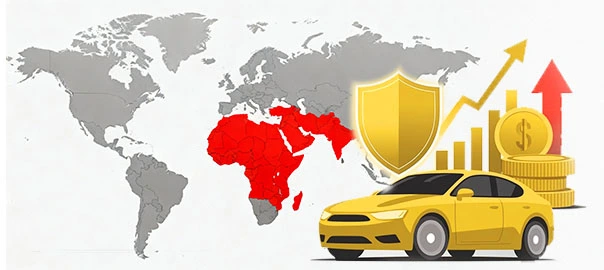
What is the Current Car Insurance Price in India?
There is no fixed car insurance price in India. It is determined by the type of policy coverage you choose, the add-ons you purchase, your vehicle type, location, and numerous other factors. However, you can explore average insurance costs to base your insurance-related decisions.
A mid-range sedan with third-party insurance can have an average annual premium of ₹2,000 to ₹10,000. If you take comprehensive car insurance coverage for the same car, the average annual premiums might start at ₹10,000 and go up to ₹20,000 or more.
Car Insurance Tips in 2026 You Must Follow
If you want to purchase the best car insurance in India, you must follow these car insurance tips in 2026.
Compare Policies Before Purchase
It’s non-negotiable for every car owner. If you have a clear idea of the type of coverage you want, look for similar policies provided by different insurers. Compare the available policies against their coverage, add-on options, cost, etc. It will help you choose the best car insurance in India.
Don’t Choose the Lowest Premium Policy
Even if you have a limited budget, avoid choosing the policy with the lowest premium, as cheaper policies provide limited coverage or higher deductibles. If you encounter a future situation in which repair and spare part costs are excessively high, underinsurance will lead to significant out-of-pocket expenses during claim settlement.
Use Add-Ons Strategically, Not Excessively
Add-ons are excellent options to increase your car insurance coverage, but you should only invest in add-ons you really need. For example, purchasing a zero-depreciation cover is reasonable for new cars, but not for older ones. Adding unnecessary add-ons can increase your car insurance price in India.
Evaluate Your Insured Declared Value (IDV) Carefully
IDV is the amount your insurer will pay if your car gets damaged beyond repair or is stolen. An inflated IDV usually leads to higher premiums, and vice versa. Hence, evaluate the IDV and choose a more realistic figure.
Why Buying Online Car Insurance in India is a Good Idea
Purchasing car insurance online in India is always a better choice than buying offline for the following reasons.
Multiple Policy Options
One of the best parts of purchasing online car insurance in India is the instant access to numerous options. You can explore multiple policies simultaneously and compare their coverage and premiums. It will help you find the best policy within your budget.
Better Price Transparency
Most insurer websites provide a clear price breakdown of every policy, so you’re aware of how much you’re paying for the insurance, taxes, add-ons, and other components. This transparency ensures you don’t overpay for any policy.
Policy is Issued Faster
More people are choosing to purchase car insurance in India online as it provides instant policy issuance. Whether you’re purchasing a brand new car insurance policy or renewing an existing one, you’ll receive confirmation and policy papers almost instantly. You cannot find this faster response during offline purchases.
Easier Access to Policy Details
Digital policies make it easier to review coverage, add-ons, and raise claims. This level of control is rare with offline policy purchases.
Car Insurance Cost in 2026 – Explained
The car insurance cost in 2026 is determined by a mix of multiple factors, such as policy type, vehicle age, location, add-ons, etc. It is also shaped by external factors, both domestic and global. Hence, if you’re exploring car insurance costs in 2026, it’s best to use a reliable insurance premium calculator that gives you a near-accurate estimate after factoring in multiple details.
How to Buy the Best Car Insurance in India
You can buy the best car insurance in India by implementing the following tips.
Start by Choosing the Right Coverage Type
Instead of starting your search with the lowest-priced premiums, prioritise choosing the right coverage type first. Although third-party insurance meets legal requirements, you should consider comprehensive coverage if you want all-around financial protection for your car.
Compare Insurers on Claim Settlement Record
When researching different insurance policies, you shouldn’t limit your evaluation to coverage, add-ons, the insurer’s reputation, and car insurance prices in India. It will be of no value if the claims are difficult to process. Hence, inspect insurers against their claim settlement ratio and payment history. Check reviews from existing policyholders for unbiased inputs.
Purchase Add-Ons Based on Existing Needs
Add-ons can help you get personalised coverage, but remember that not every add-on is necessary. You should choose add-ons that you currently need, not what you think you might need after a few years. Avoid unnecessary add-on purchases to prevent your premium from rising.
How the Oil Price Impacts Insurance
The recent Middle East crisis made many car owners question the oil price impact on insurance. Initially, these two might seem unrelated, but the connection is very real. Their layered nature may make it invisible at first. When crude oil prices rise, they raise global fuel costs.
It directly impacts transportation and logistics expenses. As a result, the cost of manufacturing and shipping car parts rises, especially in countries like India that rely heavily on imports of certain automotive components.
These high spare costs eventually translate into higher repair costs, prompting insurers to pay more per claim. If claim payouts continue to rise over time, insurance companies might adjust premiums to maintain profitability, leading to higher premiums.
What is the Car Insurance Future in India
The future of car insurance in India, at least in the near term, is likely to be shaped by rising cost pressures. Sudden price shocks stemming from regional instability in the Middle East can further put the insurance industry in challenging situations.
In the current global environment, oil prices have become volatile, and supply chains remain sensitive to disruptions. It has significantly increased the cost of maintaining and repairing vehicles.
If this situation continues, insurers may consider increasing car insurance premiums, especially on the own-damage component, rather than introducing sharp hikes. Overall, you can expect steady, cost-driven increases and personalised policy pricing in the future.
Oil Dependency – A Key Vulnerability
India imports approximately 85% of its oil. This high dependence on oil makes the country structurally vulnerable to any global disruptions in the fuel supply chain. Whenever geopolitical tensions arise in major oil-producing regions, they quickly translate into higher domestic fuel costs.
This oil dependence doesn’t just affect what you pay at petrol pumps; it also affects transportation, manufacturing, and logistics costs across the economy. It means your car repair costs and spare part replacements can also become expensive.
India is working to reduce this dependence so future crises (if any) don’t affect people.
Middle East Crisis Impact in India
If you study the impact of the Middle East crisis on India, you’ll see it clearly. Since India depends heavily on crude imports, any instability in key oil-producing nations will push global oil prices upwards.
It will increase India’s import bills and put pressure on the national currency, i.e., ₹. Inflation will also rise as a natural consequence. As the government stabilised the crisis’s impact by arranging adequate fuel supplies in the early days, the impact was limited.
Conclusion
The Middle East produces the most oil, so any instability in this region is likely to create ripple effects across sectors globally. While its impact didn’t directly affect car insurance premiums, ignoring its long-term potential can be shortsighted.
As a car owner, you should remember that in future events of a similar crisis, insurers may not increase premiums overnight. Still, the underlying cost pressures can lead to gradual premium increases.
If you’re currently focused on securing your four-wheeler against financial damages, consider exploring the Car Insurance plans at Shriram General Insurance, particularly the Comprehensive Car Insurance.
FAQs
1. Will the Middle East crisis directly impact my car insurance premium?
No, there won’t be any direct impact. However, you cannot rule out the chances of indirect impact.
2. Is there a fuel shortage in India due to the Middle East crisis?
No, there is currently no fuel shortage in India. The initial impact was felt, but the government addressed it promptly.
3. Which countries are involved in the Middle East Crisis?
The current instability in the Middle East region is due to a conflict between Iran and the United States of America (USA).
4. Has the Middle East crisis ended?
As of now, there’s a conditional ceasefire that has restored stability to some extent.
5. Were CNG cars affected due to the Middle East crisis?
No, CNG cars didn’t face any problems, as most CNG is produced domestically.