

What is Commercial Car Insurance? Coverage Benefits And Who Needs It
04 September,2026
Updated:30 September,2026
0 min read

share


Copied
 488
488This blog shares the fundamentals of commercial car insurance, including its coverage, benefits, purchase process, and more.
A car engaged in income-generation activities is exposed to a different level of risk and has a widely different usage pattern than a private car. Hence, you cannot cover it under a regular car insurance policy.
Whether you’ve partnered with a company to provide regular pick/drop services to their employees using your car or you run an independent commercial taxi fleet for regular people, you must cover such cars under commercial auto insurance. We’ve covered every key detail about business car insurance in this blog, so ensure you read till the end.
What Is Commercial Car Insurance and Who Needs It?
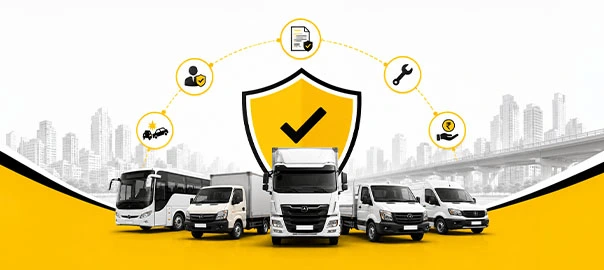
It’s a type of motor insurance policy designed exclusively for cars engaged in income-generating activities. This insurance is usually for regular taxis, app-based passenger cars, or any car registered and operated to provide passenger transport services for monetary exchange.
Here’s an expanded list of examples to clarify which cars need commercial auto insurance. It includes cars providing –
- Paid passenger transport services through ride-hailing apps
- Chauffeur-driven car services for airport transfers, corporate travel, weddings, or any paid transportation services
- Corporate employee transport services
- Rental services to travel agencies and tour operators
Essentially, any car providing passenger transportation service in exchange for money is eligible for company vehicle insurance.
Key Coverage Benefits of a Commercial Car Insurance Policy
Investing in the right commercial car insurance policy will give you access to the following coverage benefits.
Third-Party Liability Protection
Online commercial insurance can cover the policyholder’s legal liability towards third parties for death, bodily injury, and property damage arising from a road accident/collision. The coverage is subject to the policy’s specific terms and conditions.
Own Damage Coverage
If you’ve purchased a comprehensive or own damage coverage policy, then you remain financially protected against losses arising from accidents, natural calamities, man-made disasters, and other events explicitly specified in the policy’s terms.
You can claim the eligible repair and car component replacement costs resulting from these events.
Cover Against Theft & Total Loss
A commercial car is a substantial business asset. Hence, if it gets stolen or damaged beyond repair, the car owner can suffer significant financial loss.
In such cases, the insurer will settle the claim based on the vehicle’s Insured Declared Value (IDV), subject to the policy terms. However, this benefit isn’t available with a third-party coverage policy.
Optional Add-On Protection
You can seek enhanced coverage protection by purchasing available add-ons that are the most relevant to you. For instance, if you want roadside assistance during an emergency, you can opt for the roadside assistance add-on.
You can also invest in a nil depreciation cover if you don’t want to bear the depreciation cost during claim settlement.
Business Vehicle Insurance vs. Personal Car Insurance
Although both insurance plans are designed to protect a vehicle, they’re widely different from one another. The following business vehicle insurance vs personal car insurance analysis will help you identify the key differences between the two.
| Basis of Differentiation | Business/Commercial Vehicle Insurance | Personal/Private Car Insurance |
|---|---|---|
| Primary Purpose | Designed for commercial cars that provide passenger transport services for money. | Designed for private cars, i.e., cars for personal usage. |
| Risk & Premium | Since commercial cars are extensively used throughout the day, they’re exposed to a higher risk of accident/collision. Hence, they have comparatively higher premiums than private cars. | Risk exists for private cars as well, but it isn’t as high as commercial cars. Hence, their premiums are comparatively lower. |
| Designed For | Taxis, rental cars, chauffeur-driven cabs, etc. | Private cars for personal usage |
| Required Documents | Requires additional documents, such as a valid fitness certificate, permit to carry out commercial activities, driver’s license, etc. | Less documentation is needed. |
How to Buy Online Commercial Insurance for Your Fleet
If you’re planning to insure a fleet of commercial cars online, use the following steps.
Create a Digital Record of Each Car
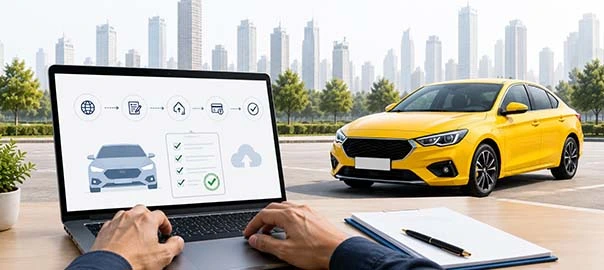
Companies/owners with a larger fleet should start with this step. Create a digital document where you note each car’s vehicle registration number, make and model, variant, registration date, current policy details (if any), etc.
Also, verify if the registration and permitted use correspond with the vehicle’s actual commercial operation. This step is crucial for fleet owners as it will make it easier to share details of each car during the purchase process.
Enter the Vehicle Details to Get a Quote
Visit the insurer’s official website and apply for a quote for the fleet. Here, you’ll have to provide the details you collected in the previous step.
The insurer will use these details to generate a quote. Since the fleet may have cars of varying age, price, vehicle type, etc., confirm whether the same policy can cover all the cars. If yes, proceed with the next step.
Note: If you cannot find the option to enter details of all cars in the fleet, contact the insurer’s customer support for personalised guidance through a toll-free number or official email ID.
Choose the Ideal Coverage Type
Choose the most suitable coverage for the fleet. Depending on the type of coverage you want for each car, you can choose between a comprehensive, own damage protection, and third-party policy.
If the cars are a significant business asset, then consider choosing a comprehensive policy with relevant add-ons.
Review the Full Policy Terms & Conditions
Once you’ve finalised the coverage, spend adequate time to understand the policy’s terms and conditions. Read information related to the policy’s inclusions, exclusions, deductibles, add-ons, claim process, and other crucial details. Proceed with the policy purchase if you’ve fully understood the coverage terms and have no objections.
Preview and Pay
You can quickly preview the key policy details, including the coverage, validity, and add-ons, before making the premium payment. Once the payment is made, you’ll immediately receive details of your commercial car insurance policy in your registered email ID.
Using an Insurance Premium Calculator for Commercial Renewal
If the company vehicle insurance is nearing its renewal date, you should reassess the premium against the provided coverage. It will help you decide whether to renew the existing policy or look for better options.
Those with a larger commercial fleet can use any reliable insurance premium calculator available on leading insurance aggregator platforms. This calculator requires key inputs, such as the car’s model, price, the type of coverage, add-ons, etc., to generate premium estimates.
You can use it for premium comparison and understanding how changing coverage or add-ons affects indicative premiums.
Disclaimer: Premium figures generated by insurance premium calculators are indicative and don’t necessarily translate to the final premium an insurer will charge. Always confirm the premium amount directly with the insurer.
Documents Required to Buy a Commercial Insurance Policy
When purchasing commercial car insurance, you’ll need to submit the following documents:
- Car’s Registration Certificate (RC)
- Valid driving license
- Permit to carry the specified commercial activity
- Fitness certificate
- PUC certificate
- Identity and address proof of the policyholder (PAN, Aadhaar, Utility bill, passport, etc.)
- Business registration papers, such as trade license, GST registration, incorporation certificate, etc.
These are a few standard documents which are generally required during policy purchase. However, an insurer can also ask for additional documents.
However, if you’re buying/renewing a passenger-carrying vehicle insurance online from Shriram General Insurance, then you won’t have to upload scanned copies of documents due to our paperless policy approach.
Conclusion
Commercial car insurance is a specialised motor insurance designed for cars engaged in income-generation activities. It usually covers taxis, rental cars, chauffeur-driven cabs, and other cars used to provide passenger transport services for money.
If you own such cars, ensure they’re always covered under a valid commercial car insurance policy. You can secure your commercial cars under our comprehensive passenger carrying vehicle insurance, as it provides all-round financial protection with ample add-on options.
FAQs
1. Is it compulsory to purchase commercial car insurance in India?
You must invest in at least a third-party commercial car insurance policy if you’re using your car for income-generating activities in India.
2. Can I use personal car insurance for a car that’s occasionally rented for money?
No, it’s illegal and can breach the terms of a personal car insurance policy. If your private car meets a road accident while being used for commercial purposes, the insurer reserves the right to reject claims.
3. Which add-ons are provided with comprehensive passenger-carrying vehicle insurance?
Nil depreciation, personal accident cover, roadside assistance, and motor protection are some of the key add-ons available with standard comprehensive policies.
4. What does a third-party passenger carrying vehicle insurance cover?
Its coverage can be broadly categorised into the following: coverage for damages caused to third-party vehicle(s), third-party property, and third-party vehicle owner injury.
5. Why should I invest in roadside assistance add-on cover?
You can consider adding this add-on to your primary policy if you want immediate roadside assistance during an unexpected vehicle breakdown.