

Petrol, Diesel, CNG, or Electric: Which Car Fuel is Best for You?
15 April,2026
Updated:30 September,2026
0 min read

share


Copied
 2285
2285This is the only guide you’ll need to find the best fuel for cars in 2026.
For years, selecting a car meant choosing between models, features, and even mileage. Fuel was almost an afterthought, but not today. People have realised that the fuel they choose directly impacts their monthly fuel costs and driving experiences.
What they struggle with is choosing the right fuel for their cars. It is precisely what the blog helps with. In this blog, we’ve covered the best car fuel types in 2026 so you can choose what’s right for you.
What is a Petrol vs Diesel Car: Which One Should You Choose?
The petrol vs diesel car debate isn’t about mileage anymore. Hence, a smarter way to compare them is not just by specifications, but by how each fits into your daily driving life.
| Basis of Differentiation | Petrol Car | Diesel Car |
|---|---|---|
| Driving Behaviour in Traffic | Petrol cars usually feel lighter, smoother, and more forgiving in stop-go conditions. It makes them perfect city traffic. | Diesel cars might feel heavier when driving at lower speeds. Although modern diesel cars are better, they still feel less effortless in heavy traffic conditions. |
| Efficiency Pattern Over Time | Fuel efficiency changes with traffic and driving style. It usually works best when usage is low to moderate. | Fuel efficiency stabilises and improves with distance. The more consistently you drive, the more cost-effective it becomes. |
| Ideal For | Urban users and occasional drivers. | Highway commuters and people who drive long distances regularly. |
| Power Delivery and Usability | Linear power makes it easier to control, especially for new drivers. | High torque at low RPM; makes overtaking, climbing, and carrying load feel effortless. |
| Refinement & Noise | Usually quieter and more refined, especially in city traffic and speed. | It’s slightly noisier and more vibration-prone compared to petrol cars, but it can be improved over time. |
CNG vs Electric Car
The CNG vs electric car debate might seem pointless at first, since both are considered ‘low-cost’ alternatives. However, they’re widely different because they solve different problems. You can settle the CNG vs electric car debate using the following comparison table.
| Basis of Differentiation | CNG Cars | Electric Cars (EVs) |
|---|---|---|
| Core Value Proposition | Minimises fuel cost while retaining traditional driving behaviour. | Eliminates fuel dependency and shifts to an energy-based ownership model. |
| Cost Per Kilometre Reality | Very low running cost, but it requires consistent access to CNG stations. | It will require the lowest running cost, especially when you charge it at home. Public charging stations might be slightly expensive, but they’ll still remain economical. |
| Performance | You might notice a slight power reduction compared to petrol cars. It feels more functional rather than responsive. | EV’s instant torque and smooth acceleration deliver a noticeably refined and responsive driving experience. |
| Ideal For | Works best for city commuters with easy access to CNG stations. | Works best for people with predictable routines and a proper home charging setup. |
| Space and Practicality | Boot space is compromised due to the CNG tank. | Boot space remains unblocked, giving you more storage space. |
What Are the CNG Car Benefits You Shouldn’t Miss
If you evaluate CNG vs petrol for cars as a fuel option, it’s easy to choose CNG for various reasons. We’ve shared the key CNG car benefits to help you understand why it’s a good fuel option and why you shouldn’t miss it.
Consistently Low Running Costs
CNG provides one of the lowest per-kilometre costs, making it a highly practical choice for most daily commuters. You might not notice the fuel cost savings initially, but they’ll become apparent over time.
Cleaner Combustion, Lower Emissions
If you compare CNG with petrol and diesel, you’ll find that CNG burns cleaner and produces fewer pollutants. Eco-conscious drivers can switch to CNG to drive responsibly in urban environments. It will significantly help reduce air pollution.
Dual-Fuel Backup for Flexibility
The dual-fuel option is the biggest CNG car benefit you shouldn’t miss. CNG cars feature a petrol mode, ensuring you won't get stranded in the middle of the road if CNG runs out or if you can't locate a nearby CNG station. Simply switching to the alternate fuel option will keep your car running.
What Are the Best Car Fuel Types 2026
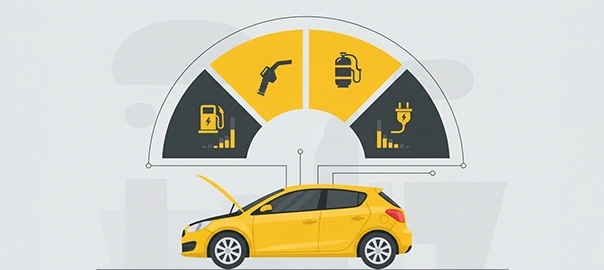
Currently, the four best car fuel types in 2026. Let’s explore each.
1. Petrol
Petrol is one of the most versatile fuel types, as it has fewer usage restrictions. Whether your driving is irregular or unpredictable, petrol can adapt easily to all driving conditions. Although it’s expensive, it’s also the safest and most convenient fuel option.
2. Diesel
Diesel is the second-best fuel option because it delivers strong fuel efficiency over long distances. Anyone with a consistent, frequent driving routine can benefit more from diesel.
3. CNG
CNG is a popular choice for car owners who prioritise low fuel costs. It works best in city environments with predictable routes, as you’ll require easy access to CNG stations for timely refuelling.
4. Electric
Electric isn’t just another option; it represents a futuristic shift away from traditional fuel sources. You should choose electric if you want the lowest running cost and no fuel dependency. However, you can only benefit from it if you have a reliable home charging setup or an abundance of EV charging stations in your area.
How to Choose the Right Car Fuel Type: Key Considerations
With so many fuel options available, it’s normal to get overwhelmed with the choices. You can use the following key considerations to choose the right fuel type for your vehicle.
Your Real Driving Pattern
Different fuels perform best under different driving patterns. Hence, start by tracking your actual driving pattern. You can monitor the monthly kilometres, trip length (short vs long), and driving conditions. It will help you choose the ideal fuel for your car and driving habits.
Infrastructure Accessibility
It’s one of the most crucial considerations because economical fuel options that look good on paper can become your biggest frustration if the relevant fuel or charging stations aren’t available to support smooth driving. So, first explore whether your city or town has enough fuel or charging stations before making a choice.
Consistency of Driving Behaviour
Some fuel types reward consistency more than others. For example, diesel and electric can be more economical options when used regularly. Petrol remains efficient even with irregular or occasional driving patterns.
How Electric Car Fuel Savings Help
Electric car fuel savings are helping vehicle owners in the following ways –
Significant Reduction in Monthly Expenses
Electric charging costs are substantially lower than petrol or diesel, especially if you charge your EV at home. Over time, it leads to noticeable savings in daily commuting expenses.
Cost Predictability Over Time
Electricity prices are more stable than those of traditional fuels, making long-term expense planning easier and more predictable.
Lower Maintenance Burden
Since electric cars don’t need engine oil or other components that need routine maintenance or changing, you enjoy additional savings through reduced service frequency.
Hybrid vs Electric Cars
An analysis of hybrid vs electric cars can be difficult for many car enthusiasts. Hence, we’ve shared a detailed comparison for your convenience.
| Basis of Differentiation | Hybrid Cars (Petrol + Electric) | Electric Cars |
|---|---|---|
| What You’re Buying Into | A more efficient version of the same petrol-based system. You will still have to refuel normally, just less often. | A completely different system where electric charging replaces traditional fuels. |
| Urban Efficiency | Excellent in city traffic, thanks to its electric-assist feature. | Even more efficient, especially in stop-and-go traffic. |
| Ideal For | People who are not yet ready to fully switch to EVs. | Anyone ready to commit to a fully electric ecosystem. |
| Dependency on Fuel | Still relies on petrol, though more efficiently. | Completely independent of fossil fuels. |
| Long-Distance Confidence | High. You don’t need to think much because fuel stations are almost everywhere, and range is not a concern. | Moderate. You can travel long distances, but only with proper route planning and awareness of charging stops. |
Understanding the Different Fuel Types of Cars Conclusion
With so many fuel options available today, it’s easy to get confused while making the right choice. In reality, there isn’t any best car fuel type in 2026. Each fuel has certain benefits and drawbacks. Hence, you should choose a fuel that delivers the kind of ownership experience you want to live with every day.
You can refer to our assessment of CNG, electric, petrol, and diesel cars shared in this blog. It will help you make an informed choice. However, your work doesn’t stop at choosing the right type of fuel. You should also choose the right Car Insurance for your vehicle.
If enhanced coverage, wider add-on options, and affordability are your top priorities, you should explore the Comprehensive Car Insurance plan at Shriram General Insurance.
FAQs
1. Is CNG a good long-term option?
Yes, it’s an excellent long-term option for daily commuters.
2. Which is the cheapest fuel option?
CNG and electric are the cheapest options.
3. Which fuel is best for city driving?
You can choose any one between petrol, CNG, and electric, as all are great fuel choices for city driving.
4. Should I choose a petrol car or a diesel car?
It depends on what you want. You can choose petrol cars if you want ease and comfort. However, diesel cars are better if you prefer efficiency and endurance.
5. What are the best car fuel types in India?
Petrol, diesel, CNG, and electric are the best car fuel types in India.