

Importance of Airbags in Car Safety Explained
30 June,2026
Updated:30 September,2026
0 min read

share


Copied
 451
451This blog shares comprehensive insights on car airbags. You’ll discover everything from airbag benefits to how airbags save lives.
Sometimes a car crash becomes imminent for reasons beyond the driver’s control. Although the crash may last a few seconds, the injuries it causes can change lives forever. Hence, every car is equipped with car safety airbags to reduce the severity of injuries during crashes, protecting the people inside. We’ve covered more about cars’ airbag safety features in this blog, so read along.
What Are Car Airbags and How Do They Work?
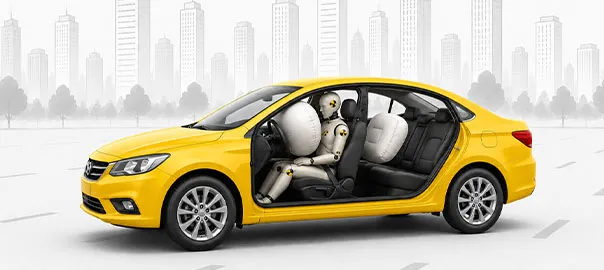
Car airbags are supplemental safety devices designed to protect people sitting inside a car during a road collision/accident. All car airbags have advanced built-in sensors that help them detect road emergencies.
If their sensors detect a crash severe enough to require additional protection, the airbag system will activate almost instantly. You can expect a fabric cushion to fill the space between people and the hard surfaces ahead. Since it will happen within milliseconds of detecting a severe crash, the protection will be almost instant.
This inflated cushion will reduce the impact force, protecting people’s most vulnerable body parts. It will significantly reduce the risk of serious injury in a crash. This is how airbags save lives.
Importance of Airbags in Car Safety
As a vehicle owner, you simply cannot ignore the importance of having airbags in cars. Treat it as a non-negotiable for your safety and that of other passengers during travel. If you’re still unsure about the need to have them in a car, read the following points. They will help you better understand the importance of airbags in cars.
Reduces the Severity of Injuries
If a sudden, severe road crash occurs, there is a high chance that the impact force may cause the front passenger to strike hard surfaces inside the cabin with immense force. It can lead to critical head and facial injuries. Car safety airbags act as a protective cushion that absorbs some of this impact. It ultimately reduces the likelihood of a severe head, chest, or facial injury.
Protects People in Different Types of Crashes
Crashes aren’t just frontal; there are also side and rear collisions. Instances of car rollover also exist. For such cases, front airbags aren’t enough to save people. This is why the safest cars in India usually include multiple airbags: front, side, curtain, and knee airbags, among others. It provides broader airbag coverage, making it easier to protect everyone in various crashes.
The Growing Focus on Road Safety in India
You may have seen a rise in the number of conversations, government initiatives, and campaigns around road safety in India over the years. It isn’t random. The unsafe road conditions have caused millions of deaths in road accidents in the past decade.
| Road Safety Statistics (2022) | Count |
|---|---|
| Total Deaths | 1,68,491 |
| Total Injured | 4,43,366 |
In 2022 alone, almost 1,68,491 people died in a road accident, and 4,43,366 people were injured. Hence, everyone from governments and car manufacturers to policymakers is prioritising road safety in India. The aim is to make Indian roads safer for everyone.
Benefits of Airbag Protection
Airbag protection should never be taken lightly. We’ve shared some of the key airbag benefits to help you understand their relevance.
Better Protection in High-Impact Collisions
In severe crashes, the impact and face are usually overwhelming and can affect people more severely even if they’re wearing a seatbelt. Since airbags open within a split second of detecting a high-impact collision, people have a higher chance of avoiding life-threatening injuries.
Enhanced Safety for Multiple Passengers
Many modern cars are equipped with multiple airbags. They’re thoughtfully positioned throughout the cabin. This strategic placement and broader coverage extend the airbag’s protection in accidents to every passenger, not just the driver.
Greater Peace of Mind While Driving on Roads
Although airbags cannot prevent road accidents, they can protect the people sitting inside the car during such cases. Knowing that you’re driving a car with reliable car safety features in India naturally takes away the stress and worry associated with unfortunate road accidents.
Different Types of Airbags in Cars
Most modern cars feature different types of airbags to provide extra protection to the driver and other passengers. You’ll generally find the following types of airbags in cars.
Front Airbags
These are the most common types of airbags found in modern vehicles. Located behind the steering wheel module and around the dashboard area, they’re designed to protect the driver and the other front passenger during a moderate-to-severe crash. If a near-frontal collision occurs, front airbags will reduce the risk of people’s heads hitting the steering wheel or other hard surfaces. They’re great for overall protection.
Side Airbags
Side airbags are usually integrated into seats or door panels, and they deploy instantly upon detecting a severe side collision. The biggest benefit of side airbags is that they can protect your chest, torso, and abdomen during a high-impact side collision.
Curtain Airbags
Designed for deployment from the roof lining above the side windows, curtain airbags usually extend downward like a protective curtain. They are primarily designed to protect your head during severe crashes and to reduce the risk of severe head injuries.
Knee Airbags
Positioned beneath the steering column or dashboard, knee airbags can help you protect your lower body during a crash. They can also help reduce lower-body injuries and improve the effectiveness of other restraint systems, including seat belts and front airbags.
Rear Side Airbags
These airbags are designed for rear-seat passengers. As the name suggests, rear-side airbags provide additional protection for passengers in the back. However, rear-side airbags are not standard in regular or mid-priced vehicles. If you want rear-seat airbags, you must consider premium, higher-end vehicles.
Common Myths About Car Safety Airbags
Whether you’re driving a car or simply sitting inside as a passenger, you will need airbag protection in an accident. Despite being one of the most important car safety features in India, many people still misunderstand it due to numerous myths surrounding it. Hence, we’ve shared and debunked some of the most common myths about car safety airbags to help you expand your awareness.
Myth 1: Airbags Can Replace Seatbelts
Reality: Airbags are designed to protect people in serious accidents, but they cannot replace seat belts. A seatbelt holds you in the correct position, and the airbag fills the space between you and the hard surfaces ahead during a crash. Understanding this difference will help you see beyond the myth.
Myth 2: More Airbags Means More Security
Reality: Yes, more airbags expand the protection coverage inside the car, but they alone don’t determine the car’s safety. You should also assess the car’s structural strength, seatbelt effectiveness, etc., to determine the overall security because they indirectly influence the degree of protection you receive during a road accident.
Myth 3: Airbags Deploy in Minor Accidents
Reality: No, airbags will not open during a low-speed, small accident. They’re primarily designed to inflate during a high-impact collision. If their built-in sensor detects a severe crash, they will instantly inflate; otherwise, they won’t.
Myth 4: Airbags Can Prevent All Injuries
Reality: Airbags can help you avoid life-threatening injuries, but they cannot prevent injuries from taking place. If the accident is severe, you may get injuries, but airbags can reduce their severity.
Myth 5: Only Drivers Need Airbags
Reality: Drivers are the most exposed to hard surfaces while driving, so they naturally need better protection. However, so does every other person sitting inside a car. If a high-impact crash occurs, it will affect everyone inside, which is why airbags are important for everyone.
Future of Airbag Safety Technology
The future of airbag safety technology looks exciting and promising. Car manufacturers are actively working with Artificial Intelligence (AI) and Machine Learning (ML) to improve airbag systems. AI- and ML-enabled airbag systems will become smart enough to classify crash types and predict likely occupant injuries before deciding on the appropriate level and intensity of airbag inflation. When paired with Vehicle-to-Everything (V2X) communication, the system can trigger seatbelt pre-tensioners upon sensing an oncoming vehicle or obstacle. It will also prepare the airbag system for customised, early deployment. Overall, you can expect to see more advanced, safer, and more efficient airbag technology in the future.
Conclusion
Regardless of your driving route, skills, or any external conditions, you will always need car safety airbags while driving. It’s a must-have to ensure your safety on the roads. Accidents are unpredictable, which is why everyone must be pre-prepared for road emergencies. Consider buying one of the safest cars in India with multiple airbags to ensure your safety and that of other passengers.
If you also want to secure your car’s safety, cover it under dependable Car Insurance. Consider exploring the Comprehensive Car Insurance plan from Shriram General Insurance if you want all-around financial coverage.
FAQs
1. Do all Indian cars have airbags?
Yes, all Indian cars have airbags. However, not every car has the same number of airbags.
2. Are rear airbags necessary?
Yes, it’s good to have rear airbags, as severe crashes can affect everyone, including people sitting in the back of the car. However, you’ll find them in premium cars.
3. How quickly does an airbag inflate during a crash?
If the airbag’s sensor detects a serious crash, the airbag will inflate almost instantly to protect passengers.
4. Will the airbags inflate in every road accident?
No, it depends on the intensity of the accident. Airbags usually don’t open during low-intensity, minor accidents.
5. Do airbags guarantee full protection from injuries?
Airbags can reduce the risk of life-altering injuries, but they cannot eliminate them.