

 3096
3096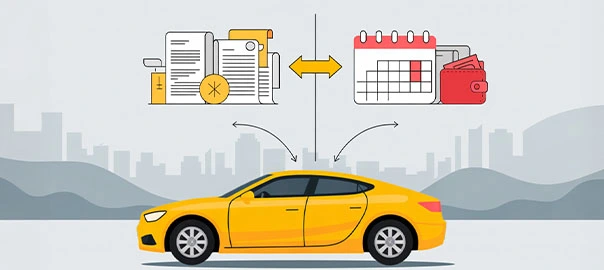
What is Ex-Showroom Price?
The ex-showroom price is the base price of a vehicle. It’s usually the amount that’s mentioned in advertisements and car manufacturers’ websites. When a dealer talks about the ex-showroom price of any vehicle, they’re talking about the price that doesn’t include insurance, road taxes, and other expenses needed to take the car outside the showroom upon vehicle purchase legally. In most cases, ex-showroom prices include costs related to manufacturing, logistics, dealer margin, and GST.
What is the On-Road Price?
The on-road car price in India in 2026 refers to the actual amount you must pay to drive the car legally as your own, outside the showroom and on Indian roads. The on-road price is the ex-showroom price plus mandatory costs, such as insurance, road tax, and registration charges. Since road tax and car registration charges may vary from one Indian state to another, the on-road price of a vehicle in India in 2026 will differ across states.
Why Ex-Showroom vs On-Road Price Matters (More Than You Think)
Being aware of the differences between ex-showroom and on-road car prices in India in 2026 is crucial for every person planning to purchase a car. Here’s why it matters more than you think:
-
Perception of False Affordability
A car that seems affordable at ₹8 lakh may actually have an on-road price of ₹9-9.5 lakh. This difference can instantly push your shortlisted car into a high-end category without you realising it initially.
-
Down Payment Shock
Since the down payment is calculated on the on-road price, underestimating it may lead to an immediate cash shortfall at the time of purchase.
-
Choosing the Wrong Variant
People generally shortlist a car’s variant based on its ex-showroom price. When they discover the on-road price of the chosen variant, they might realise it’s out of their budget.
What is the EMI Cost of a Vehicle in India
EMI is the fixed monthly amount you pay to repay your car loan over a specific tenure. This repayment includes both the principal (original amount) and the interest accrued on it. The EMI for a vehicle loan in India is calculated after taking into account multiple factors, including the car’s on-road price, loan duration, and interest rate. Although car loan EMI in India makes car ownership more accessible, it also leads to higher ownership costs over a period.
What’s Included in the On-Road Price? Full Component Breakdown
The on-road car price in India in 2026 is usually far higher than the ex-showroom price because it includes multiple cost components. We’ve covered the key components that you’ll always find in a car’s on-road price. Here’s the list.
-
Ex-showroom Price
It’s the base cost that the manufacturer sets for a vehicle.
-
Registration Charges
You must pay the registration charges to the Regional Transport Office (RTO) to become the vehicle’s legal owner.
-
Handling Charges
These are dealer charges for logistics, vehicle handling, and pre-delivery inspection.
-
Insurance
You cannot take any vehicle onto Indian roads without it being insured under a relevant insurance policy. Hence, car insurance premiums are part of the on-road price.
-
Accessories and Add-ons
These are optional costs. They’ll only be added if you purchase any add-on cover, such as zero depreciation cover, or any car accessory for vehicle modification.
What are the Differences Between On-Road Price and EMI?
If you plan to purchase a car on loan, you must first understand the difference between the on-road price and the EMI cost of a vehicle.
| Basis of Differentiation | On-Road Price | EMI Cost |
|---|---|---|
| What Is It? | Total upfront cost you must pay to own the car and take it onto Indian roads legally | The monthly payment you’ll be paying for a pre-determined loan tenure to own the car |
| Interest Component | Not Included | Included |
| Transparency | You’ll find a clear breakdown of all costs | The cost breakdown can become slightly unclear, especially if you miss a payment or make any changes to the pre-agreed breakdown |
| Total Cost Outcome | Usually lower if paid upfront | Significantly higher due to the interest charged on the car’s original price |
| Nature of Payment | One-time lump sum payment | Spread over months/years |
Why Should You Care About Car Loan EMI?
Anyone purchasing a car on loan must be aware of the importance of car loan EMI in India, as it directly affects monthly financial health. Even if a car seems affordable, a higher EMI can strain your budget for years. A poorly planned EMI can impact your savings, emergency funds, and other financial goals, such as investments in stocks and life insurance. Hence, always purchase a car in India on a monthly EMI if you can comfortably pay it without disturbing your other savings and investments.
What is a Car Loan EMI Calculator?
A car loan EMI calculator is an online tool that you can use to calculate your monthly EMI for a car loan in India. It typically requires three details from your end: the loan amount, the interest rate, and the loan tenure. Once you provide these details, the tool will instantly show you the near-accurate EMI estimates.
Formula for Calculating Car Loan EMI
If you want to calculate the car loan EMI manually, you can use the standard formula. Here’s the formula: [P x R x (1+R)^N]/[(1+R)^N-1].
In this formula,
P= Principal amount
R= Interest rate
N= Total number of months over the loan tenure
Why Use a Car Loan Calculator Instead of Manual Calculation?
Although you can manually calculate the car loan EMI using the formula above, there is a chance of manual error. Manual calculation can also appear complex and time-consuming to some. And in case you make a small mistake, it will drastically change the financials and affect you in the long term. Hence, consider using a car loan calculator for error-free estimates.
Conclusion
Being aware of the ex-showroom, on-road, and car price EMI difference should be considered non-negotiable for new vehicle buyers. This understanding won’t just give you clarity about the different numbers, but also put better control in your hands. Ignoring this basic distinction might lead you to underestimate the true cost of your car. If you want to stabilise a car’s on-road price, you can do it by choosing a cost-effective Car Insurance plan that doesn’t compromise coverage. You’ll find such plans at Shriram General Insurance, so do check them today.
FAQs
1. Do I have to pay the ex-showroom price or the on-road price when purchasing the vehicle?
You will have to pay the on-road price at the time of vehicle purchase.
2. Do car loans cover the full on-road price?
Most lenders will cover a significant portion of the on-road price, but you’ll still have to make the down payment from your pocket.
3. Why is a car’s on-road price higher than its ex-showroom price?
The on-road price is always higher than the ex-showroom price because it includes expenses such as car registration, insurance, and road taxes.
4. Can on-road prices vary for the same car?
Yes, the on-road prices of a car can vary across Indian states due to different road tax and registration charges.
5.Will a longer loan tenure reduce the actual cost of car ownership?
No. In fact, longer loan tenures can increase the cost of your car ownership because you’ll have to pay interest for more years.