Child Presence Detection (CPD) System How It Works And Why It Matters
05 November,2026
Updated:05 November,2026
0 min read

share


Copied
 29
This is a detailed guide on child presence detection systems in cars. It covers the fundamentals of CPD technology, how CPD works, and much more.
A sleeping infant in the rear seat can be easy to overlook when a parent is distracted, exhausted from work, or rushing through a familiar routine. Even when done unknowingly, it can have serious consequences.
As a result, modern cars with a safety-first approach are starting to integrate child presence detection (CPD) systems. It’s a huge relief for parents and other caregivers who frequently travel with a small child. We’ve created this detailed guide to help you understand the CPD system.
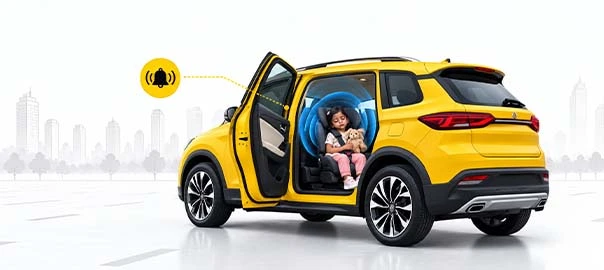
What is Child Presence Detection (CPD) in Cars?
Child presence detection (CPD) is an advanced vehicle safety technology. It identifies when a child has been left inside a parked car and raises an alert when it detects one.
This system relies on multiple technologies, including advanced sensors, signal processing algorithms, and camera-based systems for precise detection.
Depending on the system your car manufacturer chooses, the CPD system can alert you by raising an alarm, sending a notification to a vehicle-connected app, or another method.
Why is Child Presence Detection Important for Car Safety?
CPD in cars is becoming increasingly important because it reduces the risk of children being accidentally left in parked/unattended vehicles. Beyond convenience, it’s crucial for the following reasons –
Helps Reduce the Risk of Heatstroke in Children
A parked car can become dangerously hot quickly, even if the weather outside seems comfortable. If you accidentally leave a child in a parked car, their body can heat up three to five times faster than an adult’s.
If their body becomes excessively hot, they may experience a heatstroke, affecting their health. CPD in cars can prevent it by alerting car owners in time.
Provides a Safeguard Against Human Error
Distractions, fatigue, or a change in routine can make a caregiver forget that a child is in the rear seat. With a CPD system, you’ll get an additional warning after leaving the car, reducing your reliance on memory alone.
Can Alert People Beyond the Driver
Advanced child detection systems in cars aren’t limited to alerting the owner/driver. Depending on the system, warnings may include a loud horn, flashing lights, or other external indication that can draw people’s attention. It enhances child safety in cars.
How Does a CPD System Work? How Does CPD Detect a Child Inside a Car
As a caregiver to an infant, toddler, or any other small child, you may wonder how CPD works in cars. Its working mechanism is straightforward, involving the following three steps –
- It monitors the cabin using advanced sensors, cameras, and radar
- The system processes the captured information to identify a possible occupant, i.e., a child in this case
- An alert is issued as per the system’s default alert method
Detection methods may vary slightly across cars, as different manufacturers may use different systems built on slightly different technology. You can find the precise working mechanism in your car manual, so do read it for clarification.
Key Technologies Used in Child Presence Detection (CPD)
Not every CPD system uses the same technology suite across all cars. However, you might notice the following CPD technology in many standard models.
Camera-Based Vision Systems
These systems use in-cabin cameras and image processing software to identify any occupants inside the vehicle. While they’re generally known for accuracy, they often raise privacy concerns.
Infrared (IR) & LED Sensors
Infrared sensors can detect thermal radiation or changes in infrared signals, depending on their design. Infrared illumination usually helps the camera capture images in low-light conditions.
This CPD technology can help you detect children even during night hours or in extremely low-visibility conditions. Since these sensors detect body heat, positioning, and other thermal signatures, they carry comparatively less privacy risk.
Millimetre-Wave (mmWave) Radar
Available in advanced models, these sensors use high-frequency radio waves to detect subtle movements inside the cabin. With this CPD technology, the system can easily identify tiny movements associated with breathing and other signs of life. It helps detect a child that’s barely moving or covered by a blanket.
Wi-Fi & RF Sensing
These systems analyse changes in radio frequency signals as they travel through a vehicle’s cabin. Movement can alter these signals, helping the system identify possible human presence.
How CPD Alerts Drivers About a Child Left in the Car
To enhance car child safety, a CPD system can alert car owners in several ways. Here’s an expanded list of ways in which you can receive an alert –
- A continuous loud alarm
- Persistent escalation warnings, like repeated horns, if no response is registered within a particular time
- Flashing hazard lights
- Push notifications sent to the owner’s smartphone via connected-car technology.
Some advanced CPD systems in cars may escalate alerts to emergency service departments, such as the police or ambulance department, if a child is detected in an unattended vehicle and the car owner doesn’t respond within a specified time.
Child Presence Detection vs Seat Belt Reminder Systems
While both CPD and seat belt reminder systems aim to enhance occupant safety, they differ significantly. This comparison table will give you clarity on both.
| Basis of Differentiation | Child Presence Detection (CPD) System | Seat Belt Reminder System |
|---|---|---|
| Primary Purpose | Helps prevent a child from being accidentally left alone in a car. | Alerts the driver and passengers to fasten their seat belts for safety. |
| Provides Protection From | Exposure to dangerous cabin temperatures and other risks of being left alone in a parked car. | Risk of injuries arising from a collision. |
| It Detects | The presence of a child left unattended in a vehicle. | Whether the driver and other occupants have fastened their seatbelts. |
| Alert Modes | May sound the horn, flash hazard lights, or send a notification on a smartphone. | Commonly, a dashboard warning light and an audible chime until the seatbelt is fastened. |
Benefits of Child Presence Detection (CPD) Technology
CPD in cars provides several advantages for parents and other caregivers. Here’s a quick glimpse into the benefits of CPD technology –
- Helps prevent heatstroke in children unintentionally left in a parked car; timely alerts can help the car owner take the child out before anything serious happens.
- Reduces sole reliance on memory, as timely alerts are issued upon detecting a child in an unattended car
- External alerts, such as repeated loud horns and flashing hazard lights, can grab other people’s attention, ensuring child safety even if parents/caregivers aren’t nearby.
- Advanced systems can detect subtle movements, so even infants covered by a blanket are easy to identify.
- Automated alerts sent to emergency departments ensure help arrives for child protection if the car owner doesn’t register any response within a specified time.
These are a few benefits that you can expect from a child presence detection system installed in cars.
What Should Parents and Drivers Know About CPD?
As a parent or a driver, you should know the following things about CPD in cars –
- A CPD system isn’t the same as a rear-seat reminder system.
- Not all child presence detection (CPD) systems use the exact same technology suite; expect slight model-wise variations.
- While useful, camera-based systems can pose privacy risks because they monitor the entire cabin to detect a child’s presence.
- Alert/notification methods vary by model; some trigger loud alarms, while others send a message to the owner’s phone via connected-car technology.
- Even the most advanced systems may not detect children accurately every time, so don’t rely on them too much; stay alert and careful to ensure child safety.
The Future of Child Detection in Cars
As more people have started prioritising safety while buying a car, you can expect a promising future for child presence detection systems in cars. In fact, the global market is estimated to grow at a 42.75% CAGR from 2026 to 2035.
Even if your car doesn’t have a pre-installed CPD system, you can install one as an aftermarket upgrade. The easy availability of aftermarket child presence detection systems, paired with rising awareness of child safety in cars, is fueling the rapid growth of the CPD market.
Conclusion
If you’re a parent or a caregiver, CPD in cars is more than a crucial vehicle safety feature. It’s designed to strengthen child safety while bringing you immense convenience during stressful days.
Since it’s designed to detect and alert car owners about children left behind in an unattended/parked vehicle, it can significantly reduce the risk of heatstroke-related health challenges in children.
People planning to purchase a luxury car with advanced CPD technology should prioritise enhanced financial protection for such vehicles. You can secure it under our Comprehensive Car Insurance plan, which provides all-round coverage and ample add-on options for coverage personalisation.
FAQs
Is a CPD system available in all cars?
No, it’s not available in every car. Currently, you can find such systems only in luxury models. If you’re planning to install one in your existing car, consider reliable aftermarket options.
Which technology does a CPD system use for accurate child detection?
While the exact technology suite may vary by vehicle, many CPD systems use camera-based systems, infrared sensors, mmWave radar, and Wi-Fi & RF sensing.
Can CPD detect a sleeping baby in the rear seat?
Yes, some advanced CPD systems are designed to detect subtle signs of life, such as breathing. It helps the system detect a sleeping baby even if the child is covered by a blanket or not generating any visible movements.
Can a CPD detect children in low-visibility conditions?
Yes, a CPD powered by infrared and LED sensors can identify children in low-visibility conditions, such as at night.
How does a CPD alert the car owner/driver?
There is no universal method valid for every car. In some cars, the system can alert the owner via continuous loud horns. In others, the alert can come via flashing hazard lights or a message on the phone.