Car Tyre Burst on Highway: What Should You Do?
Posted:
19 November,2026
Updated:19 November,2026
0 min read

share


Copied
 20
This blog shares a step-by-step action plan for handling a tyre burst on highways. It also lists potential causes of car tyre bursts and ways to handle them.
A sudden tyre burst on a highway is one of the most difficult things a driver in India can face. While dangerous, it’s more common than you might think. Your car’s tyre can burst for any reason, such as incorrect tyre pressure or sharp road debris.
Regardless of the reason, it’s crucial to handle such situations responsibly. Hence, we’ve created this blog to help drivers navigate tyre bursts on highways. It covers every key aspect, from tyre burst causes to tyre burst safety plans and more.
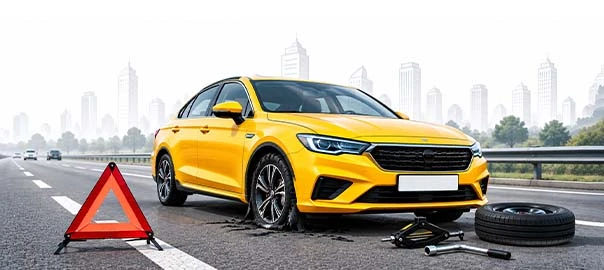
What Causes a Car Tyre to Burst on the Highway?
There isn’t a single reason why **car tyres burst on highways**. A car’s tyre can burst for any of the following reasons –● Incorrect Tyre Pressure
If car tyres are underinflated, the tyre’s sidewalls may flex excessively as they roll, generating excess heat that can damage the internal structure. Similarly, overinflated tyres become more vulnerable to impact damage. Both can lead to tyre bursts if you don’t restore normal pressure in time.● Potholes and Road Debris
Hitting a pothole, kerb, or sharp road debris can damage a tyre’s internal structure, even when the damage isn’t immediately visible. If you keep driving on a damaged tyre, a sudden burst is likely.● Carrying Excessive Luggage
While less discussed, it’s among the most common **causes of tyre bursts**. Some drivers unknowingly carry more passengers or luggage than the vehicle is designed to support; it significantly increases the load on the car’s tyres. Driving such overloaded vehicles at prolonged high speeds can cause additional heat build-up, leading to tyre bursts.● Excessive Heat and Sustained High Speed
Tyres generate heat as they roll, and sustained high-speed driving increases the pressure on them. Factors like hot weather and incorrect tyre pressure can compound the stress on tyres, gradually increasing the risk of tyre failure.What Happens When a Tyre Bursts While Driving?
A sudden **tyre burst on the highway** can affect your car’s stability, steering, and handling. If a tyre bursts, you may hear a loud bang, feel a sudden yet strong vibration, or notice the vehicle pulling to one side. Front-tyre bursts are usually felt more strongly, and rear-tyre bursts may make the car’s rear sway. In such cases, the car usually becomes difficult to handle. If you’re wondering how to handle a **tyre burst while driving** on a highway, read the following sections on a **tyre burst safety** plan.
What to Do After a Tyre Burst on a Highway
If your car’s **tyre bursts while driving** on the highway, your priority should be to maintain vehicle control. You can gradually reduce your car’s speed and stop somewhere safe. Once the car has stopped, take the following steps for **tyre burst safety**.
● Turn on the Hazard Warning Lights
Once the car is stable, turn the hazard warning lights or place a reflective warning triangle at the back of your car to alert approaching vehicles. It can reduce the risk of secondary collisions.● Contact Emergency Service Providers
If your car’s tyre bursts on any stretch of a national highway, you can call 1033 for roadside assistance. This national highway helpline operates 24*7 year-round to provide emergency assistance, such as sending patrol vehicles, ambulances, and towing cranes. Alternatively, contact your insurer for assistance if you’ve purchased roadside assistance add-on. They will send help so you can safely resume your journey.● Park the Car in a Safe Location
Avoid making the vehicle stand still in the middle of heavy traffic. If you still have control of the car, move it to a safe location away from traffic. Once parked, you can change the tyre yourself if you have the right tools and knowledge. Otherwise, wait for help to arrive.
Tyre Burst Safety: Step-by-Step Actions to Follow
A sudden **tyre burst on the highway** can leave many drivers overwhelmed. They may struggle to think through such situations, making it difficult to control the situation effectively. So, we’re sharing a step-by-step action plan for what you can do after a tyre burst to stay safe.
● Grip the Steering Wheel Firmly
Keep both hands on the wheel and try to control the car’s movement. However, you should avoid jerking the steering wheel or making an abrupt lane change, as it may worsen the situation.● Avoid Sudden Braking
Some drivers panic and start slamming on the brakes. Ensure you don’t do it. Also avoid abruptly lifting your foot off the accelerator, as it can further destabilise the vehicle. A better option is to ease off the accelerator gradually. Let the car slow down while keeping it as straight and stable as possible. Then apply the brakes gently.● Check Your Surroundings & Pull Over Safely
As your speed decreases, assess the traffic around you and identify a safe place to stop. Then, steer towards the stopping area without cutting across lanes or making sudden movements. Don’t stop in a live traffic lane unless an immediate hazard leaves you no safer option.● Switch on the Hazard Lights
Once the car is stable and you can safely operate the controls, turn on the hazard warning lights to alert approaching drivers.● Secure Yourself & Passengers While Arranging Roadside Assistance
If your car is stalled and traffic is moving around it, don’t exit the car randomly. Instead, sit inside and contact your insurer for roadside assistance. This option is available only if you’ve purchased a roadside add-on with the main policy. Alternatively, call 1033 (the National Highway helpline) to request roadside assistance. Wait for help to arrive so they can handle the situation.
What Should You Avoid During a Car Tyre Burst?
During a **car tyre burst**, avoid impulsive actions, as they may worsen the situation. Here’s a list to help you understand what you shouldn’t do during a **car tyre burst on the highway**.
- Don’t slam on the brakes, as abrupt braking can upset the vehicle’s balance and make it harder to control.
- Do not jerk the steering wheel, as sudden steering inputs can make the car swerve into another lane or collide with nearby vehicles.
- Don’t accelerate to regain speed; avoid abrupt acceleration or throttle changes during tyre bursts.
- Don’t stop abruptly in a lane with moving traffic; if the car is still controllable; try to move to a safe stopping area.
- Don’t try to change the damaged tyre beside fast-moving traffic.
How to Check Tyre Pressure Before a Highway Journey
One of the best ways to reduce the likelihood of a **car tyre burst** on highways is to check the tyre’s pressure and condition before you start the journey. Here’s how you can check the tyre pressure correctly –● Find the Recommended Tyre Pressure
First, check the vehicle owner’s manual or the tyre pressure label to find the ideal tyre pressure. You can find the label inside the driver’s door area or on the fuel-filler flap.● Use a Tyre Pressure Monitoring System (TPMS) to Get the Reading
Use a portable tyre pressure monitoring device to take the reading. Once ready, remove the tyre’s valve cap, press the gauge firmly onto the valve, and note the reading. Do this for all four tyres to get a reading for each. The reading should be compared against the manufacturer’s recommended pressure level.● Make Adjustments & Recheck
If the reading indicates abnormal air pressure, then adjust the tyres to the correct pressure. Once done, recheck the pressure on all tyres before beginning your journey.
Tyre Pressure Safety: Why Correct Inflation Matters
Maintaining the correct inflation is necessary for **tyre pressure safety**. Tyres with normal air pressure make better contact with the road. Beyond predictable handling, it also stabilises braking and overall vehicle stability. If your car’s tyres have low air pressure, they’ll flex excessively as they roll, generating additional heat that might damage their internal structure. Similarly, if car tyres are overinflated, they’ll be more vulnerable to impact damage from potholes and road debris, depending on the road conditions. Hence, ensure your car tyres always have the right amount of inflation for safety and smooth driving experiences.
How to Identify Tyre Damage Before a Long Drive
Before a highway or any city road journey, you should first inspect your car tyres’ condition. Check for visible signs of damage and confirm the tyre is in good condition. You should particularly look for any –
- Cuts and cracks
- Sidewall bulges
- Uneven wear/bald patches/embedded objects like nails on the tyre tread