


How Regenerative Braking Works and Its Importance on Battery Life
29 January,2026
Updated:29 January,2026
0 min read

share


Copied
 2095
2095Every time you slow down at a traffic signal or ease off the accelerator, your car silently releases energy. In regular vehicles, this energy is simply lost as heat. Regenerative braking, standard in EV and hybrid vehicles, takes a smarter route.
If you drive an EV or a hybrid car, slowing down becomes an opportunity to recover part of that motion (kinetic energy) and turn it into electricity that helps recharge the car’s battery.
The result is better efficiency without changing how you drive. This system works particularly well in the background in stop-and-go city conditions. It makes everyday driving more energy-efficient.
Understanding Regenerative Braking Technology
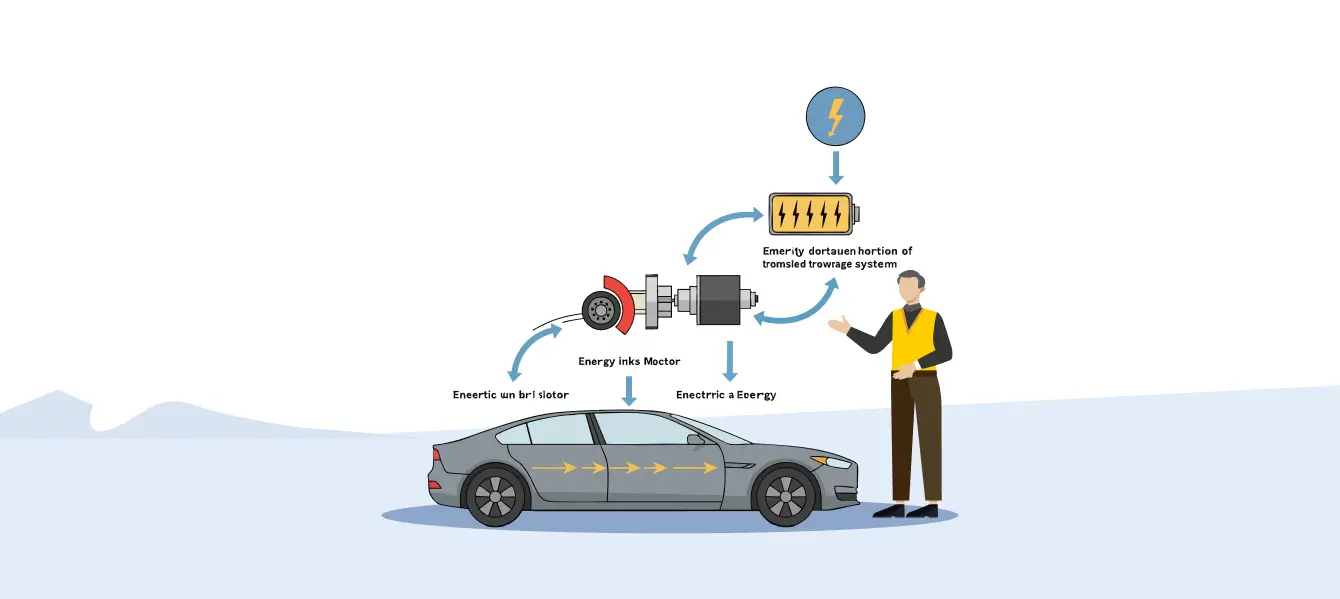
If you’re a car owner, you must learn about regenerative braking. It’s an innovative energy-saving technology that uses the car’s electric motor in two different roles. The first role is conventional, where the motor turns the wheels. The moment you apply the brakes or ease the acceleration, it draws power from the car’s battery to turn the wheels.
The second role is more dynamic as the motor acts as a generator. In its dual role, the motor converts your car’s kinetic energy into electrical power, which is sent to the car’s battery. If you’re still confused about how regenerative braking works, consider watching how a bicycle dynamo works. Just like a bicycle dynamo lights a lamp when the wheel spins, the car’s motor becomes a generator to produce electrical power.
The motor converts kinetic energy into electrical power before sending it back to the car’s battery for future use. Unlike regular brakes, which rely solely on friction to slow the vehicle and release energy as heat, regenerative braking makes smart use of the same energy.
While regenerative braking is energy-saving, a car cannot run entirely on it. Hence, most vehicles use an EV braking system to supplement regular brakes. The usual mechanical brakes are mostly used when stronger stopping power is needed. Regenerative braking is used during slow, frequent stops, which are common in urban city drives.
Positive Impact on Battery Life and Vehicle Efficiency
Regenerative braking improves both the car battery and vehicle efficiency. This energy recovery system can extend your car’s driving range by sending and storing a steady amount of energy in your car’s battery.
Since it charges your car’s battery with sufficient energy, it can be used in the future instead of fuel. It not only improves your car’s fuel efficiency but also reduces reliance on mechanical brakes, resulting in less brake wear and lower maintenance costs over time.
If you explore this braking system from a battery’s standpoint, then you’ll learn how it contributes to a healthy battery. Regenerative braking prevents deep discharges by topping up the battery in small amounts. This controlled energy flow preserves battery health and maintains stable temperature control.
Challenges and Battery Health Considerations
One of the biggest challenges with EV braking systems is how they impact a car’s battery. Since this system undergoes frequent charge-discharge cycles, it results in many small charging events that require careful control. If you overlook this aspect, it will cause long-term battery wear.
As far as your car’s battery health is concerned, it is handled by the Battery Management Systems (BMS). BMS limits the amount of energy the battery can accept. Hence, it protects the battery from overcharging while balancing energy flow to preserve battery health.
Besides BMS, your car’s battery is also protected by adaptive braking. Whenever you apply regenerative braking, thermal load (heat) is generated in electrical components. In such cases, the vehicle uses adaptive systems that balance regenerative and mechanical braking to reduce battery and system stress.
Conclusion
Regenerative braking is standard in EV and hybrid vehicles. It shows how modern vehicles use smart design to improve efficiency without demanding anything extra from the driver. They convert ‘slowing down’ into a source of usable energy for modern vehicles. The EV braking system also limits brake wear, supporting healthier battery use.
Although regenerative braking has introduced new considerations about the car’s battery health, advanced control systems are quietly managing these concerns effectively. For car owners and enthusiasts, regenerative braking isn’t just clever technology; it’s a practical reason modern vehicles feel more efficient and smoother to drive.
You can protect such cars under EV Car Insurance policy. However, if you own a regular vehicle, you may secure it under Shriram Car Insurance. It not only provides generous coverage but also provides relevant add-on covers, such as key replacement cover, engine protector cover, and more for personalised coverage.
FAQs
1.What is regenerative braking, and how does it work?
Regenerative braking is a smart technology that converts a car’s kinetic energy into electrical power. This converted power is sent to the car’s battery for future use, extending your car’s driving range and improving fuel efficiency.
2.Does regenerative braking improve or reduce battery life?
It depends on how you manage it. In most cases, it improves the car’s battery if managed properly. Proper management reduces deep discharges and spreads energy use more evenly. All this leads to a healthy battery life.
3.How do Battery Management Systems (BMS) support battery health?
BMS controls energy flow to the car’s battery. It eventually prevents overcharging and also manages temperatures. Charge levels are also balanced, so energy is safely absorbed without damaging the battery.
4.Can regenerative braking reduce vehicle maintenance costs?
Yes, it can. By reducing reliance on friction brakes, regenerative braking lowers brake pad and disc wear. It can notably reduce brake-related maintenance costs over the vehicle’s lifespan.